






Home | Blog |

Bast Fiber Baler
Bast fibers are plant fibers that come from the stem of certain plants, such as flax, hemp, jute, and ramie. They are classified as “soft fibers” because they are generally flexible and have a relatively low elasticity compared to other types of plant fibers. Bast fibers are used in a wide variety of products, including textiles, paper, cordage, composites and packaging materials. They are highly valued for their strength, durability, and resistance to stretching and shrinking. However, the production and processing of bast fibers can be challenging due to their tough, fibrous nature. That’s where bast fiber baler comes in.
What is a bast fiber baler?
A bast fiber baler is a machine that is designed to compress and bundle bast fibers into compact bales. These bales are easier to transport, store, and process than loose fibers.
Bast fiber balers come in a variety of sizes and designs, from small, manual machines to large, automated systems. The basic principle of operation is the same: the fibers are fed into the machine, where they are compressed and bound into bales using twine or wire.
What are the benefits of using a bast fiber baler?
Increased Efficiency: A bast fiber baler can process large quantities of fibers quickly and efficiently, which can save time and labor costs in the production process.
Reduced Transportation Costs: Compressing the fibers into bales makes them more compact and easier to transport, reducing transportation costs and increasing the amount of product that can be shipped in a single load.
Improved Storage: Baled fibers take up less space than loose fibers, making them easier to store and reducing the risk of damage or deterioration.
Consistent Quality: Baled fibers are more uniform in size and density, which can improve the consistency and quality of the final product.
Environmental Benefits: Bast fibers are renewable and biodegradable, making them a more environmentally friendly alternative to synthetic fibers. Using a bast fiber baler can help to reduce waste and improve the sustainability of the production process.
In conclusion, bast fiber balers are essential tools for the production and processing of natural fibers. They offer a range of benefits, from increased efficiency and reduced costs to improved quality and sustainability. As the demand for natural and sustainable materials continues to grow, bast fiber balers are sure to play an increasingly important role in the manufacturing industry.
When selecting a bast fiber baler, it’s important to consider factors such as the type and quantity of fibers being processed, the required bale size and density, and the available space and budget for the machine. Contact SINOBALER today to find your best suitable bast fiber baling solution.
Quick links:
Other Blogs
Molded Fiber Scrap Baler
2025/09/19
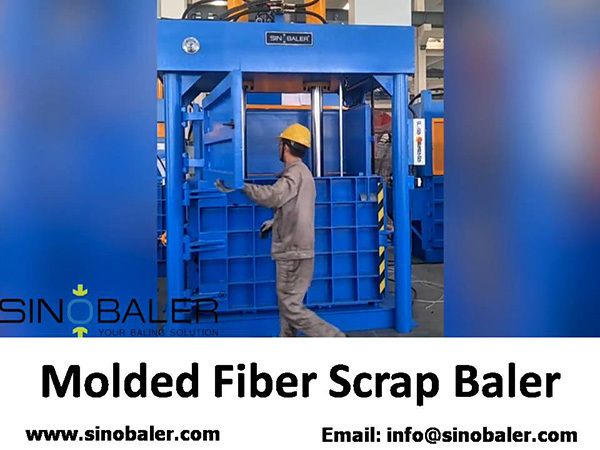
A Molded Fiber Scrap Baler is a machine that processes molded fiber waste — such as egg cartons, fruit trays, plant pots, shipping inserts, and protective packaging, etc. — by compressing it into dense bales for handling, transportation, recycling or reuse. This helps companies managing high volumes of molded fiber scrap to streamline operations, reduce waste cost, and support sustainability programs.

BCL Fiber Baler
2025/05/21
BCL fiber (Banana Cellulose Leaf fiber) is a biodegradable, renewable, and increasingly popular material used in textiles, eco-packaging, paper production, and composites. However, its loose and fluffy nature makes it difficult to handle, store, and transport efficiently. Known for its strength and eco-friendliness, BCL fiber requires proper handling and packaging to maintain its quality during

Textile Fiber Compactor
2025/05/15
The Textile Fiber Compactor is a specialized baling machine designed to compress and bale loose textile fibers, threads, and selvedges generated in weaving mills and other textile manufacturing processes. These lightweight and fluffy materials are typically difficult to handle, store, and transport in their loose form. This compactor offers an efficient solution by converting the

Polyester Fiber Baler
2024/12/18
Polyester fiber is one of the most widely used synthetic materials in the textile and industrial sectors. Its durability, lightweight nature, and resistance to wrinkling and shrinking make it an essential component in clothing, upholstery, insulation, and other applications. However, managing polyester fiber waste presents challenges for businesses aiming to adopt sustainable practices. Polyester fiber

Cotton Fiber Baler
2024/11/29
Cotton fiber, a vital agricultural product, is widely used in the textile industry to produce fabrics, yarns, and other materials. However, the process of handling and transporting cotton fibers can be challenging due to their bulkiness and lightweight nature. A cotton fiber baler is a specialized machine designed to compress cotton fibers into dense, manageable

Manila Fiber Baler
2024/11/26
Manila fiber, derived from the abaca plant, is a highly durable and versatile natural fiber widely used in industries such as marine ropes, paper products, and textiles. Managing and transporting large quantities of this valuable material efficiently can be challenging due to its bulkiness and irregular shape. A Manila fiber baler is a specialized machine

Coconut Fiber Baling Machine
2024/10/15
Coconut fiber, also known as coir, is a natural byproduct of coconut processing, widely used in industries like agriculture, furniture, and textiles due to its durability and biodegradability However, managing the bulkiness of coconut fiber presents a logistical challenge. A coconut fiber baling machine provides a vital solution by compacting the fiber into dense, manageable […]

Elastic Fiber Baler
2024/07/23
Elastic fibers are integral to various products, including clothing, medical supplies, and industrial materials. These fibers are characterized by their ability to stretch and return to their original shape, making them essential in applications that require flexibility and durability. However, due to their elastic nature, managing these fibers can be challenging, especially when it comes […]
Related Videos


Other Blogs
2025/09/19
A Molded Fiber Scrap Baler is a machine that processes molded fiber waste — such as egg cartons, fruit trays, plant pots, shipping inserts, and protective packaging, etc. — by compressing it into dense bales for handling, transportation, recycling or reuse. This helps companies managing high volumes of molded fiber scrap to streamline operations, reduce waste cost, and support sustainability programs.
2025/05/21
BCL fiber (Banana Cellulose Leaf fiber) is a biodegradable, renewable, and increasingly popular material used in textiles, eco-packaging, paper production, and composites. However, its loose and fluffy nature makes it difficult to handle, store, and transport efficiently. Known for its strength and eco-friendliness, BCL fiber requires proper handling and packaging to maintain its quality during
2025/05/15
The Textile Fiber Compactor is a specialized baling machine designed to compress and bale loose textile fibers, threads, and selvedges generated in weaving mills and other textile manufacturing processes. These lightweight and fluffy materials are typically difficult to handle, store, and transport in their loose form. This compactor offers an efficient solution by converting the
2024/12/18
Polyester fiber is one of the most widely used synthetic materials in the textile and industrial sectors. Its durability, lightweight nature, and resistance to wrinkling and shrinking make it an essential component in clothing, upholstery, insulation, and other applications. However, managing polyester fiber waste presents challenges for businesses aiming to adopt sustainable practices. Polyester fiber
2024/11/29
Cotton fiber, a vital agricultural product, is widely used in the textile industry to produce fabrics, yarns, and other materials. However, the process of handling and transporting cotton fibers can be challenging due to their bulkiness and lightweight nature. A cotton fiber baler is a specialized machine designed to compress cotton fibers into dense, manageable
2024/11/26
Manila fiber, derived from the abaca plant, is a highly durable and versatile natural fiber widely used in industries such as marine ropes, paper products, and textiles. Managing and transporting large quantities of this valuable material efficiently can be challenging due to its bulkiness and irregular shape. A Manila fiber baler is a specialized machine
2024/10/15
Coconut fiber, also known as coir, is a natural byproduct of coconut processing, widely used in industries like agriculture, furniture, and textiles due to its durability and biodegradability However, managing the bulkiness of coconut fiber presents a logistical challenge. A coconut fiber baling machine provides a vital solution by compacting the fiber into dense, manageable […]
2024/07/23
Elastic fibers are integral to various products, including clothing, medical supplies, and industrial materials. These fibers are characterized by their ability to stretch and return to their original shape, making them essential in applications that require flexibility and durability. However, due to their elastic nature, managing these fibers can be challenging, especially when it comes […]
Media and Gallery
Follow us


PRIVACY POLICY
We collect information from you when you fill out an inquiry or contact form. When submitting the form on our site, you may be asked to enter your name and contact details such as: e-mail address, mailing address and/or phone number, etc. Alternatively, you can choose not to complete our forms and visit our site anonymously. Any of the information we collect from you may be used to help us to better respond to your individual needs, and/or enable us to more effectively respond to your customer service requests and support needs. The email address you provided may also be used to send you information and updates pertaining to your inquiry and/or order, in addition to receiving occasional company news, updates, related product or service information, etc. SINOBALER does not sell, trade, or otherwise transfer to outside parties your personally identifiable information. This does not include trusted third parties who assist us in operating our website, conducting our business, or servicing you, so long as those parties agree to keep this information confidential. We may also release your information when we believe release is appropriate to comply with the law, enforce our site policies, or protect ours or others rights, property, or safety.
By using our site, you consent to our online privacy policy. If we decide to change our privacy policy, we will post those changes on this page. If you have any questions or concerns regarding our privacy policy, please e-mail info@sinobaler.com or mail your question to us at 1206 Yinzhou Shanghui Nan Lou, 1299 Yinxian Avenue, Yinzhou District, Ningbo 315192, P.R. China.
EXTERNAL LINKS & DISCLAIMER
Our web site has links to many other organizations with their permission. Upon leaving the SINOBALER web site, you are subject to the privacy policy of the new site which are not under our control. SINOBALER is not responsible for the content of any linked site or any link contained in a linked site. These links are provided to you as a service for you to better understand the different business relationships that SINOBALER has established, and/or to point the reader to other possible relevant resources.