







Used Clothes
Used Clothes Baler for Textile Recycling, Sorting & Export
Compact used clothes, second-hand clothing, textiles, rags and household fabrics into dense, easy-to-handle bales for storage, transportation, resale and recycling. SINOBALER provides customized baling solutions for used-clothing processors, textile recyclers, sorting centers, exporters and recycling facilities.
Used Clothes Baler: A Practical Baling Solution for Textile Recycling
Used clothing is one of the most common materials handled by textile recyclers, second-hand clothing companies, charity organizations, textile sorting centers and used-clothing exporters.
The material may include:
- Used clothes and second-hand clothing
- T-shirts, shirts, trousers and jackets
- Jeans and denim
- Sorted textile materials for resale or recycling
As the volume of textiles increases, storage space, handling efficiency and transportation costs become major operational challenges.
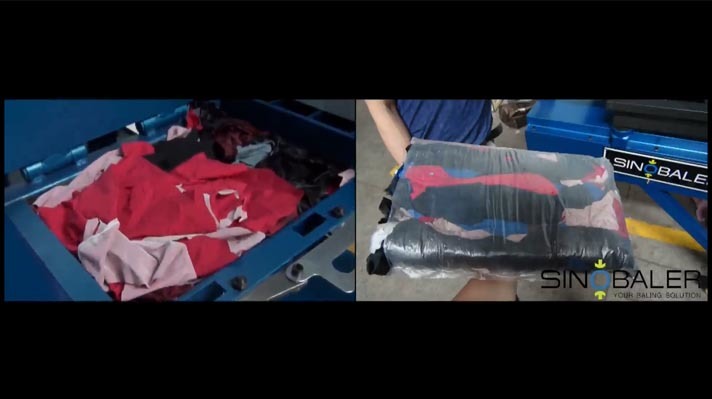
A suitable used clothes baler compresses loose textiles into dense, uniform bales that are easier to store, stack, weigh, load, transport and sell.
For textile recyclers and used-clothing exporters, the right baler is therefore not simply a machine for reducing volume—it is an important part of the material-handling workflow.
Why Bale Used Clothes?
Loose clothing takes up a considerable amount of space and can be difficult to handle efficiently.
Baling used clothes provides several practical advantages:
1. Save Storage Space
Compressed textile bales occupy substantially less space than loose clothing.
This allows recycling plants, warehouses and sorting centers to make better use of available floor space.
2. Reduce Transportation Volume
Dense bales allow more material to be loaded into trucks or containers compared with loose textiles.
This can help reduce the transportation cost per unit of material.
3. Improve Material Handling
A properly compressed bale is much easier to move using forklifts, pallet trucks or other material-handling equipment.
4. Make Sorting and Trading Easier
Used clothing can be sorted by:
- Clothing type
- Quality
- Season
- Material
- Destination market
- Reuse or recycling application
After sorting, each category can be baled separately for easier inventory management and shipment.
5. Prepare Textiles for Reuse or Recycling
Baled clothing can be supplied to different downstream markets, including:
- Second-hand clothing markets
- Textile recycling plants
- Wiping-rag manufacturers
- Fiber recovery facilities
- Textile shredding operations
- Reuse and donation programs
Which Used Clothes Baler Should You Choose?
The best baler depends on your material, bale weight, production volume, feeding method, available labor and downstream requirements.
SINOBALER generally recommends two main approaches for used clothing applications:
Application | Recommended Baler | Best For |
|---|---|---|
Small/medium textile operation | Used clothes, towels, blankets and general textiles | |
Higher productivity textile operation | Continuous feeding + baling | |
Mixed textile & recyclable materials | Textile + cardboard, plastics and other recyclables | |
Higher-volume operation | Conveyor-fed continuous production | |
Customized textile recycling line | Customized Baling System | Integrated sorting, conveying and baling |
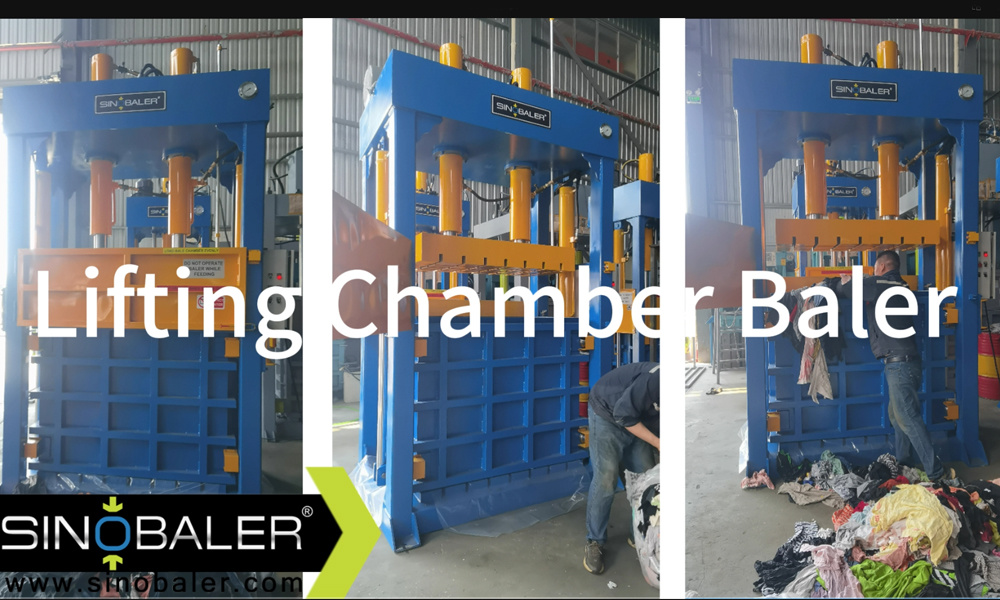
Lifting Chamber Baler for Used Clothes
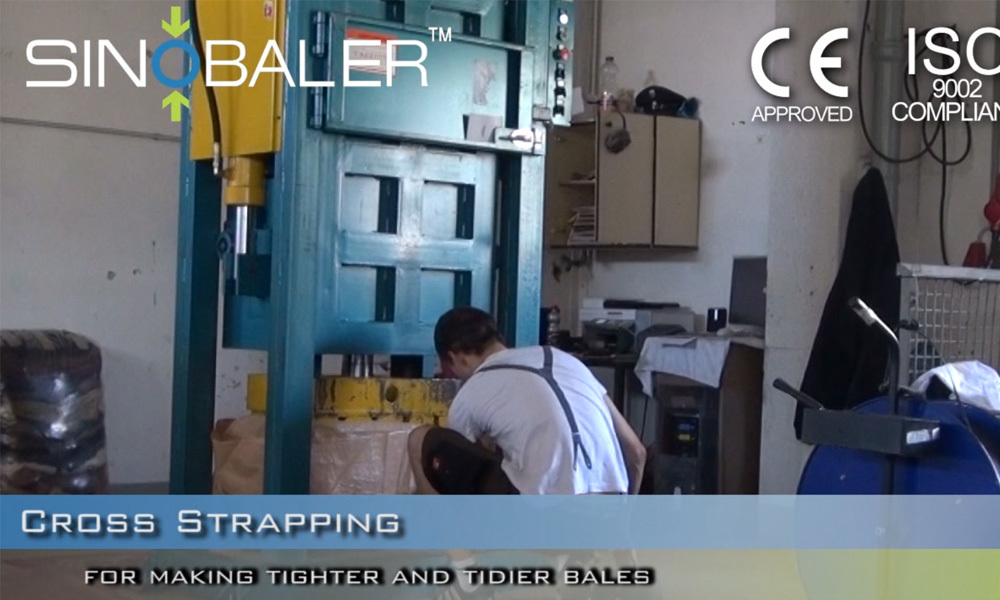
The Lifting Chamber Baler is particularly suitable for used clothing and textile recycling applications.
It is designed to compress loose textiles into compact bales while maintaining a practical operating footprint.
Suitable materials
- Used clothing
- Second-hand clothes
- T-shirts
- Jeans
- Jackets
- Towels
- Rags
- Blankets
- Curtains
- Sheets
- Other soft textiles
Its relatively simple operating method makes it suitable for textile warehouses, sorting facilities, charitable organizations and small-to-medium recycling operations.
Typical production: approximately 3–10 bales/hour, depending on material, bale size, feeding method and operator efficiency.
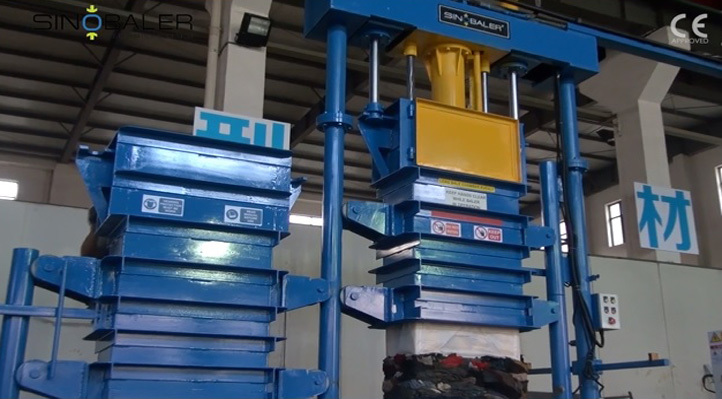
Swivel Twin Lifting Chamber Baler for Higher Productivity
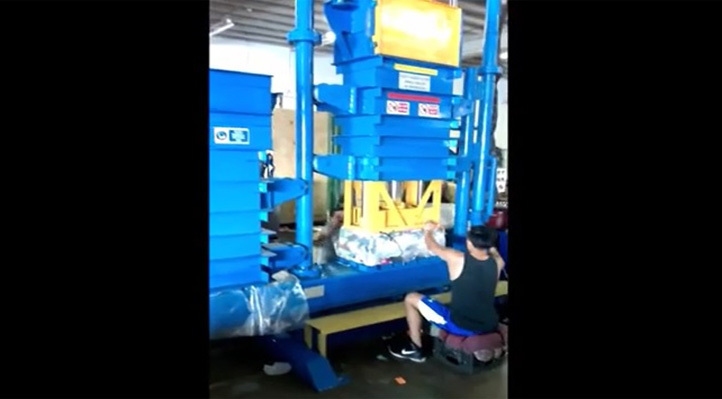
For companies processing larger volumes of used clothing, the Swivel Twin Lifting Chamber Baler can significantly improve workflow efficiency.
Its two-chamber configuration allows the operator to feed one chamber while the other chamber is being compressed, helping reduce waiting time between baling cycles.
Why use a twin-chamber baler?
With a conventional single chamber, the operator may need to wait for the complete compression cycle before feeding the next load.
With a twin-chamber configuration:
Chamber A → Compression
Chamber B → Feeding
Then the chambers switch roles.
This synchronized workflow can be particularly valuable for used-clothing sorting and recycling facilities where a steady stream of textiles is available.
Recommended for
- Used clothing recycling plants
- Second-hand clothing sorting centers
- Textile warehouses
- Used-clothing exporters
- Charity clothing collection centers
- High-volume textile operations
Horizontal Baler for Used Clothes & Mixed Recyclables
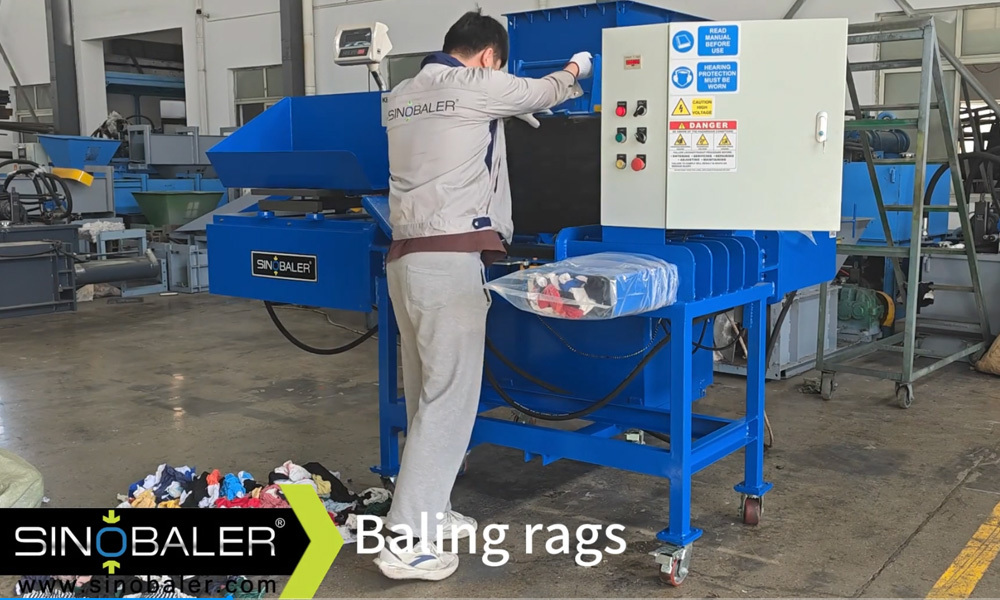
If your facility handles used clothes together with cardboard, plastic film, PET bottles or other recyclable materials, a horizontal baler may provide greater flexibility.
SINOBALER horizontal balers are available with different tying and feeding configurations.
Manual-Tie Horizontal Baler
A manual-tie horizontal baler can be a practical choice when:
- Production volume is moderate
- Labor is available
- Investment budget is controlled
- Different materials need to be baled
- Flexible bale sizes are required
Automatic-Tie Horizontal Baler
For larger textile recycling facilities, an automatic-tie horizontal baler can reduce manual tying operations and improve production efficiency.
It can be integrated with conveyors for more continuous material feeding.
Depending on the configuration, SINOBALER horizontal balers can produce approximately 3–13 bales/hour, with bale dimensions available up to around 1100 × 1100 × 1200 mm.
Actual output depends on the material, bale size, feeding system, compression cycle and operator workflow.
Used Clothes Baling Process
A typical used-clothing recycling operation can be organized as follows:
Collection → Sorting → Quality Classification → Baling → Storage → Loading → Reuse / Recycling

For larger facilities, the process can be expanded:

Used Clothes Collection
↓
Sorting & Inspection
↓
Material Classification
↓
Conveyor Feeding / Manual Feeding
↓
Used Clothes Baler
↓
Bale Tying / Bale Ejection
↓
Weighing & Labeling
↓
Warehouse Storage
↓
Export / Resale / Textile Recycling
How to Feed Used Clothes into a Baler?
Feeding configuration has a direct impact on labor requirements and productivity.
Manual Feeding
Manual feeding is suitable for:
- Small and medium operations
- Sorted clothing
- Intermittent production
- Facilities with limited automation requirements
Operators place clothing directly into the baling chamber.
Conveyor Feeding
A conveyor can be used when the textile sorting process already has a continuous material flow.
It can reduce manual material handling and improve feeding consistency.
Integrated Textile Recycling Line
For large-scale operations, the baler can be integrated with:
Sorting → Conveyor → Baling → Weighing → Bale Handling
The exact configuration should be designed according to your material flow and production capacity.
What Bale Weight Do You Need?
There is no single “best” bale weight for used clothes. It can range from 40kgs to 500kgs or more.
The appropriate bale specification depends on how the bales will be sold, transported, stored and handled.
For example:
Second-Hand Clothing
If bales are sold according to clothing category or destination market, the buyer may specify:
- Bale weight
- Bale dimensions
- Clothing category
- Compression density
- Bale tying method
Textile Recycling
Recycling facilities may prioritize:
- High density
- Easy forklift handling
- Consistent bale dimensions
- Maximum transportation efficiency
Export
For used-clothing exporters, bale dimensions and weight should also be considered in relation to:
- Container loading
- Truck loading
- Forklift capacity
- Destination-market requirements
- Customer bale specifications
Before selecting a baler, tell SINOBALER your target bale weight and dimensions so we can recommend a suitable configuration.
Used Clothes Baler for Export & Second-Hand Clothing Businesses
Used clothing is frequently sorted and compressed before being transported to domestic or overseas markets.
For exporters, baling can make a significant difference to warehouse organization and logistics.
A suitable baler can help create compact, stackable and standardized textile bales, making it easier to:
- Organize warehouse inventory
- Separate different clothing grades
- Load trucks
- Load shipping containers
- Handle bales with forklifts
- Calculate shipment quantities
- Protect loose textiles from unnecessary handling
If your business exports used clothing, SINOBALER can design the baling solution around your target bale weight, dimensions, production capacity and loading method.
Used Clothes Baler Buying Guide
Before purchasing an used clothes baler, answer these questions:
1. How much used clothes do you process?
Tell us your approximate:
tons/day, tons/month or bales/day.
Production volume is one of the most important factors when selecting between a single-chamber, twin-chamber or horizontal automatic baler.
2. What bale weight do you require?
Your buyers may require a specific bale weight.
3. How will you feed the material?
Choose between:
Manual feeding → Conveyor feeding
4. Do you bale used clothes only?
If you also process cardboard, plastic film, PET bottles or other recyclable materials, a multipurpose horizontal baler may be a better investment.
This information helps determine the appropriate bale size and density.
Why Choose SINOBALER for Used Clothes Baling?
SINOBALER focuses on application-specific baling solutions rather than one-size-fits-all machines.For used clothes baling, we can help you select a baler based on:
- Material volume
- Bale weight
- Bale dimensions
- Required density
- Available floor space
- Transportation requirements
- Downstream recycling process
SINOBALER has more than 20 years of experience supplying used clothes baling equipment to customers worldwide. With extensive application expertise and in-house manufacturing capabilities, we are confident in designing and manufacturing the right baling solution to meet your specific material, bale size, capacity, and handling requirements.
Need a Baler for Used Clothes?
Tell us what you are processing and what bale you need. We will help you select the most suitable used clothes baler.
Send us:
- Material: used clothes / mixed textiles / towels / rags / etc.
- Capacity: tons/day or tons/month
- Target bale weight: kg/bale
- Target bale size: if available
- Application: resale / export / recycling / storage
SINOBALER can then recommend the appropriate baler model and configuration for your operation.
Contact SINOBALER today for a customized used clothes baling solution.
Related Textile Recycling Applications
For further size reduction after baling or as part of a textile recycling line, you can also explore PROSINO textile shredders.
VIDEOS


PICTURES


Similar Applications
APPLICABLE MACHINE

Vertical Bagging Baler Machine
Vertical bagging baler machines are perfect for compressing and bagging small, loose materials for easy handling and transport. They press materials into compact bales and bag them in one step, ideal for factories handling pet food, animal bedding, fertilizers, fabrics, and more. Suitable materials include peanut shells, cotton seeds, chopped straw, hay, wood shavings, fibers, and rice hulls. One person can produce up to 30 bales per hour, each weighing 44–66 lbs. The removable bag feature adds versatility, allowing the machine to bale other materials without bagging when needed.

Scale Weighing Horizontal Bagging Baler
Scale weighing horizontal bagging baler is ideal for packing loose materials like rags, straw, hay, wood shavings, pet food, and textile scraps. Commonly used in pet food plants, farms, fertilizer factories, and recycling centers, it helps turn loose waste into valuable, bagged bales. Equipped with PLC control, one-button operation, and a hopper sensor switch, it can produce 25kg bales (700×400×310mm) at up to 60 bales/hour. The built-in scale ensures precise bale weight. It automatically compresses, bags, and ejects materials for easy handling, storage, and transport.

Heavy Duty Horizontal Bagging Machine
One main use of a horizontal baling and bagging machine is for loose materials like sawdust, wood chips, rags, peanut shells, cotton seeds, and rice hulls. These are hard to handle, but this machine automatically feeds, compresses, and bags them for easier storage, transport, or resale. Sinobaler’s Horizontal Baling & Bagging Machine features PLC control, one-button operation, and a safety sensor switch. It produces 60 bales/hour (88 lbs each, 28×16×12 in). Ideal for textile recyclers, pet food plants, farms, fertilizer factories, and any site generating loose waste.

Lifting Chamber Baler / Textile Baler / Clothes Baler
A lifting chamber baler, also called a used clothes or textile baler, is ideal for textile waste recycling. It's perfect for textile manufacturers, used clothing recyclers, second-hand shops, exporters, and rag graders. The lifting chamber design simplifies strapping, wrapping, and bale ejection for easy one-person operation, cutting labor costs. Bale weights range from 30kg to 600kg with up to 150 tons of force. For higher efficiency, the twin lifting chamber model allows simultaneous feeding and baling.

Swivel Twin Lifting Chamber Baler
The Swivel Twin Lifting Chamber Baler features a modern design and advanced engineering, making it an efficient solution for textile waste handling. It has two chambers connected by a central pivot—one chamber loads materials while the other compresses, bales, and straps them. This synchronized operation balances loading and processing, improving productivity. When a bale reaches its set compression, the chamber lifts automatically, signaling cycle completion and reducing downtime. Ideal for textile waste exporters and used clothing dealers, this baler offers efficiency, user-friendliness, and labor savings.
L-type Two Ram Automatic Horizontal Baler
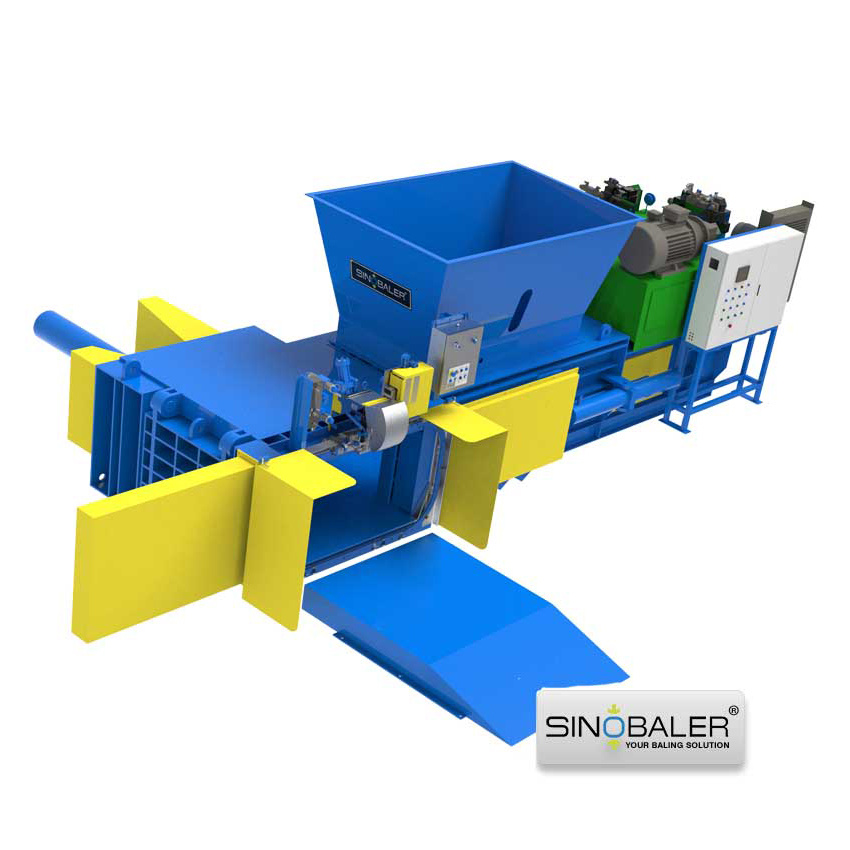
The L-type two ram automatic horizontal baler is ideal for baling a wide range of recyclable waste. Compared to single ram balers, it offers greater versatility, supports both wire and plastic strapping, and produces high-density bales thanks to its separate strapping unit. Its flexible design can include features like a pre-compression lid to prevent cutting sensitive materials like textiles. Perfect for high-volume recycling centers, fodder exporters needing plastic straps, and municipal waste handlers seeking to avoid jams common in single ram balers.
Media and Gallery
Follow us


PRIVACY POLICY
We collect information from you when you fill out an inquiry or contact form. When submitting the form on our site, you may be asked to enter your name and contact details such as: e-mail address, mailing address and/or phone number, etc. Alternatively, you can choose not to complete our forms and visit our site anonymously. Any of the information we collect from you may be used to help us to better respond to your individual needs, and/or enable us to more effectively respond to your customer service requests and support needs. The email address you provided may also be used to send you information and updates pertaining to your inquiry and/or order, in addition to receiving occasional company news, updates, related product or service information, etc. SINOBALER does not sell, trade, or otherwise transfer to outside parties your personally identifiable information. This does not include trusted third parties who assist us in operating our website, conducting our business, or servicing you, so long as those parties agree to keep this information confidential. We may also release your information when we believe release is appropriate to comply with the law, enforce our site policies, or protect ours or others rights, property, or safety.
By using our site, you consent to our online privacy policy. If we decide to change our privacy policy, we will post those changes on this page. If you have any questions or concerns regarding our privacy policy, please e-mail info@sinobaler.com or mail your question to us at 1206 Yinzhou Shanghui Nan Lou, 1299 Yinxian Avenue, Yinzhou District, Ningbo 315192, P.R. China.
EXTERNAL LINKS & DISCLAIMER
Our web site has links to many other organizations with their permission. Upon leaving the SINOBALER web site, you are subject to the privacy policy of the new site which are not under our control. SINOBALER is not responsible for the content of any linked site or any link contained in a linked site. These links are provided to you as a service for you to better understand the different business relationships that SINOBALER has established, and/or to point the reader to other possible relevant resources.