







Category:
Foam Shredding & Compacting Plant
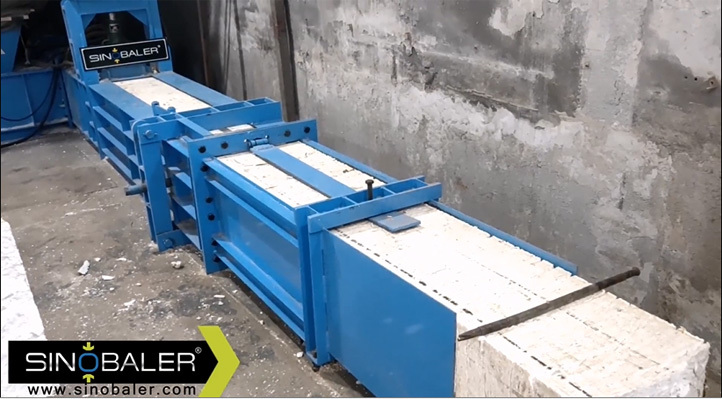
This integrated foam shredding and compacting plant processes EPS and XPS foam via a mechanical, pollution-free cold pressing system. It includes an infeed conveyor, foam shredder, blower, silo, auger feeder, and hydraulic compactor—no foam densifier required—allowing safe operation even in residential areas. The system produces flat, dense blocks (over 360 kg/m³) with a 40:1 compression ratio, maximizing transport efficiency. Two compactor models are available to meet various productivity needs.


Product description
Engineered specifically for processing foam waste, including EPS foam and XPS foam, this comprehensive foam shredding and compacting plant is a fully integrated solution. Comprising a range of meticulously designed equipment, the system includes an infeed conveyor, a specialized foam shredder (also referred to as a foam breaker or crusher), a fan-based blowing system, a spacious silo, an auger feeder, and a hydraulic foam baler/compactor.
No need the involvement of a foam densifier that generates smelly & toxic odor and pollute the environment, our system purely adopts mechanical processes to break and compact the foam waste without causing any pollution, which we also call a cold pressing system. Due to the feature of pollution-free, users have more choices with regards to where to set up the plant – you can set up it even in residential areas. Besides, the blocks compressed by our system are of flat rectangular shape, maximizing the utilization of transportation space.
In direct comparison with traditional screw-type foam compactors, our hydraulic compactor, coupled with an auger feeder, produces significantly denser blocks, thereby maximizing loading capacity within containers or lorries. Achieving an impressive compression ratio of above 40:1 and a block density exceeding 360 kg/m³, our system ensures outstanding efficiency. The substantial silo capacity enables staggered operation of the shredder and compactor, allowing you to commence the baler process once the silo approaches foam shred capacity.
To accommodate varying productivity requirements, we offer two compactor models. While both are exceptional, one is equipped with a higher-capacity hydraulic system for faster processing.
Contact Sinobaler sales representative now and we will tailor an optimal solution for your foam recycling project.
Main Features
- Hydraulic-driven compressing system
maximizes foam block density and mostly save transportation cost. - PLC controlled
automates the operation and promotes accuracy. - HMI (touch screen) operation interface
simplifies the operation of the compactor. - Auger feeder for the compactor
increases feeding efficiency and helps densify foam blocks. - The big silo
collects considerable amount of foam shreds to ensure continuous feeding into the compactor. - Multi-direction anti-expansion devices
Helps keep the compressed blocks well shaped.
Specifications
| Model | Bale size | Bale density | Throughput | Strapping | ||
|---|---|---|---|---|---|---|
| Length | Width | Height | ||||
| SHB1-FB-600A |
Adjustable mm ( inch) |
390 mm (15.4 inch) |
420 mm (16.5 inch) |
360 (kg/m3) |
300 kg/h |
- |
| SHB1-FB-600B |
Adjustable mm ( inch) |
400 mm (15.7 inch) |
500 mm (19.7 inch) |
360 (kg/m3) |
400 kg/h |
|
CUSTOMER CASES

BALING Applications
Ideal for EPS foam and XPS foam recycling projects.

Applicable industries
RELATED Baler & Accessories
FAQ about this machine
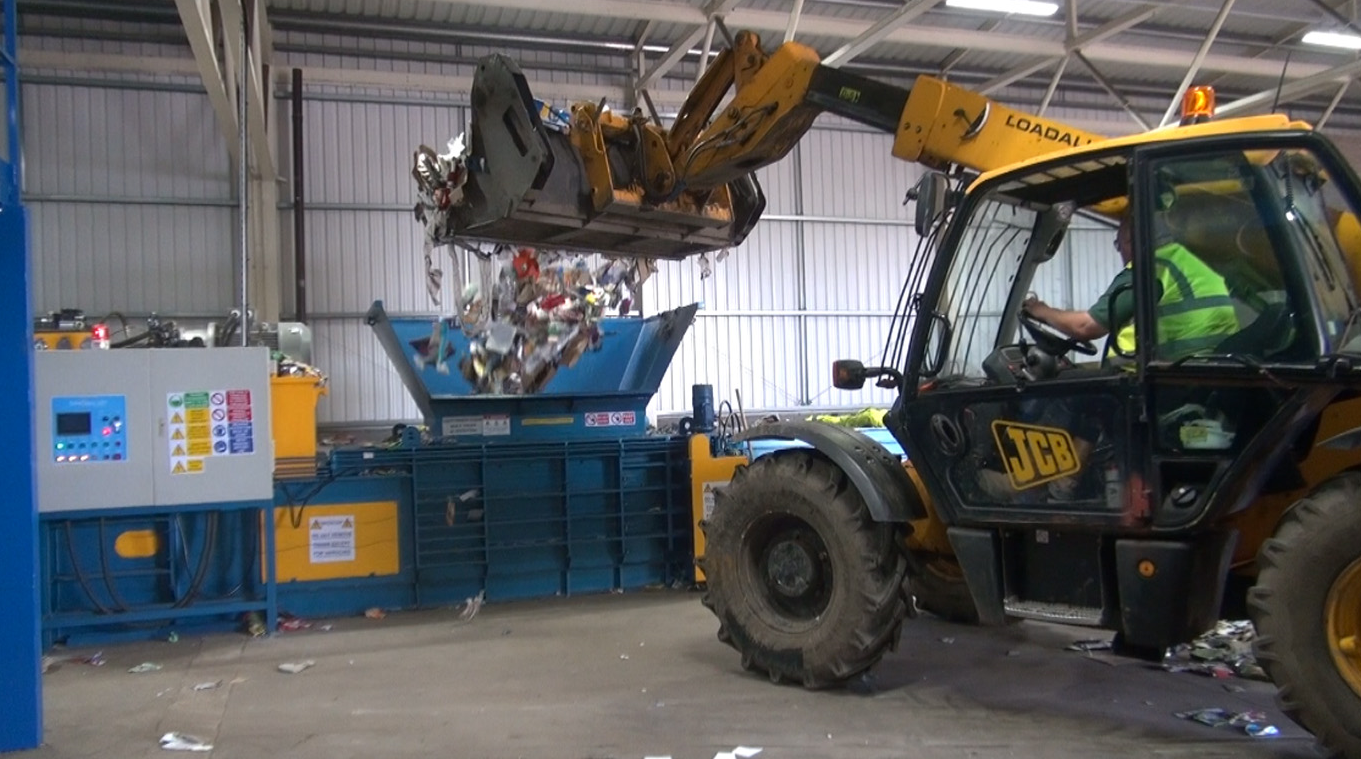
Feeding materials into a baler can be done in various ways depending on the type of materials, the equipment involved, and the setup of the baling system. Here’s a breakdown of some common feeding methods:
1.Excavator:
- Used for: Large, bulkier materials like scrap metal, wood, or other heavy materials.
- How it works: An excavator with a bucket or grapple is used to load materials into the hopper or feed opening of the baler. The excavator can precisely place materials into the feeding area.
- Advantages: Ideal for large-scale operations, especially when materials are heavy or difficult to move manually.
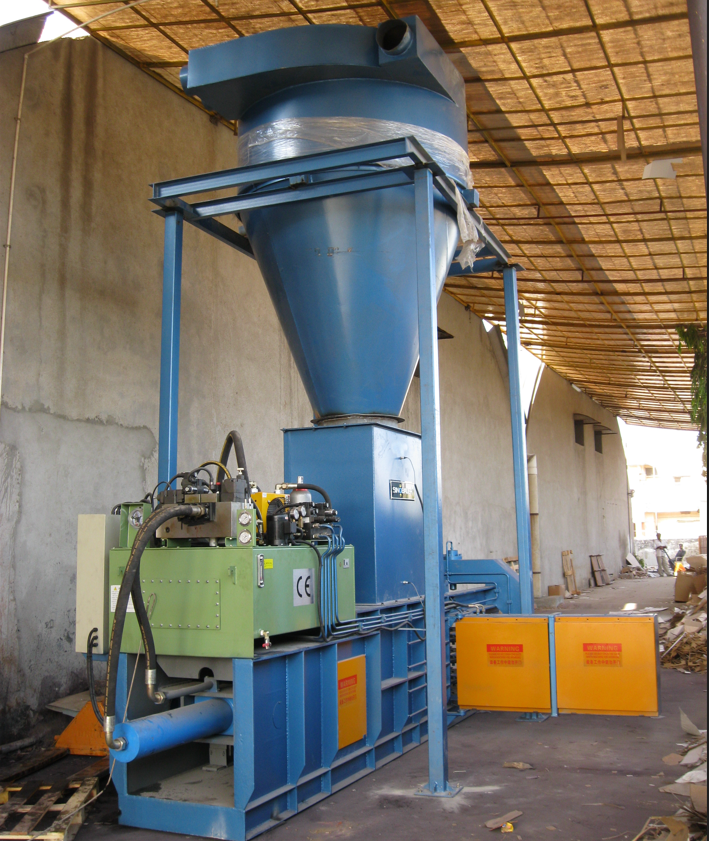
2. Air Cyclone:
- Used for: Light, fluffy materials like paper, plastic, or other recyclables that need to be separated from dust and debris.
- How it works: An air cyclone system uses airflow to move lightweight materials into the baler. It can also help in separating light materials from heavy ones before they enter the baling chamber.
- Advantages: Great for automating the process and improving efficiency when dealing with fine materials or mixed waste.
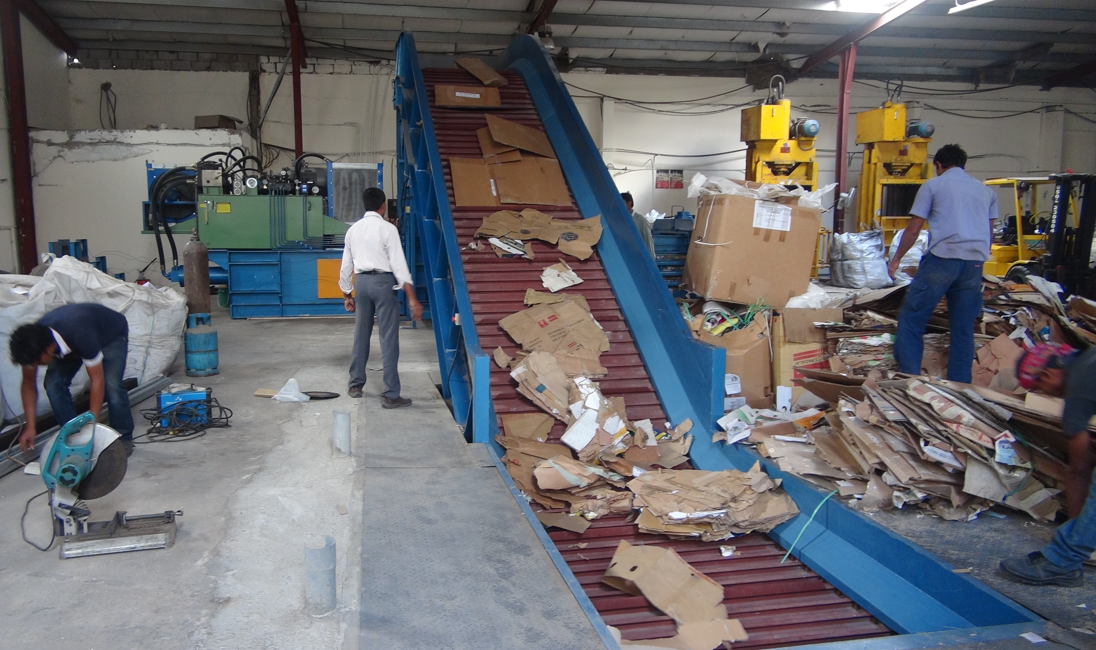
- Used for: Continuous feeding of materials like cardboard, plastics, textiles, or paper.
- How it works: Materials are loaded onto a conveyor belt, which moves the materials to the baler’s feed hopper. The conveyor can be configured to run automatically or manually, depending on the material flow and system design.
- Advantages: Ideal for continuous, high-volume feeding, especially in automated recycling plants or warehouses.
4. Dumper (Tippers):
- Used for: Materials in bins or containers, such as industrial waste, textiles, or recyclables.
- How it works: A dumper or tipper lifts a container of materials and dumps it directly into the baler’s feed hopper. This is often seen with bulk bins or compacted waste.
- Advantages: Simple and effective for large quantities of materials that are pre-loaded into containers. It reduces manual labor and speeds up the feeding process.


5. Other options:
- Manual Feeding: For smaller-scale operations or when dealing with materials that require sorting, workers might feed materials directly into the baler using forklifts or by hand.
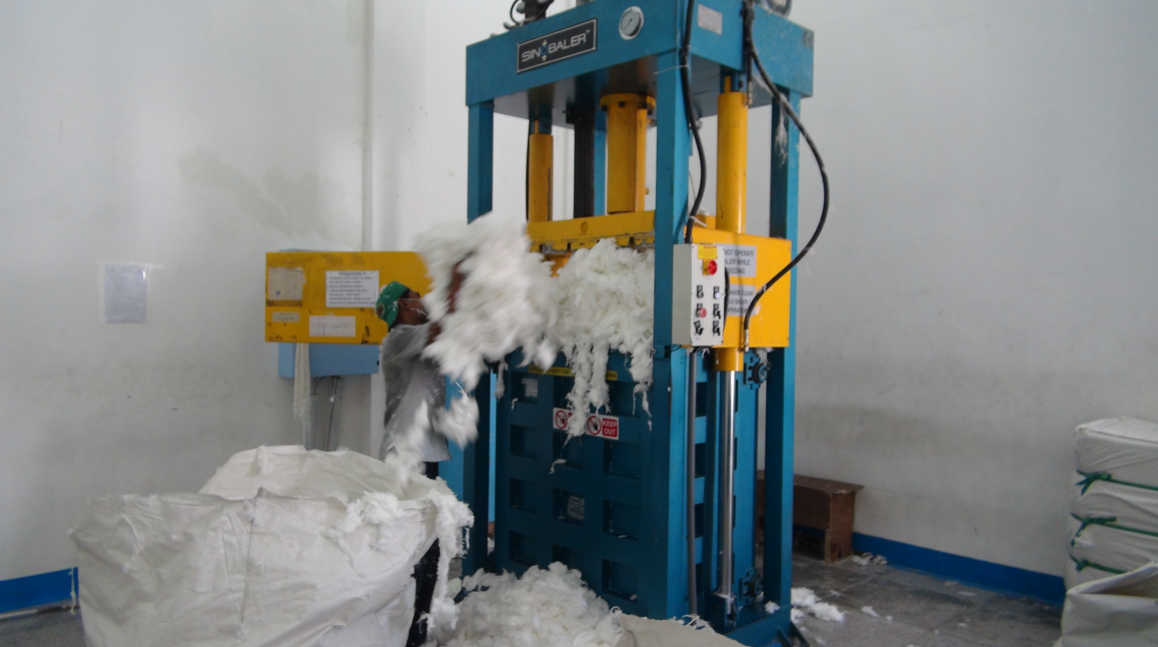
- Forklift: Can be used to lift and drop larger bales or materials into the baler’s feed area.
Each of these methods can be adapted based on the specific baling process, material type, and operational needs. For maximum efficiency, it's important to match the feeding method to the material characteristics and volume.
I agree that my personal data collected by SINOBALER is processed, used and stored in compliance with data protection exclusively for the purpose of processing my request.
Media and Gallery
Follow us

PRIVACY POLICY
We collect information from you when you fill out an inquiry or contact form. When submitting the form on our site, you may be asked to enter your name and contact details such as: e-mail address, mailing address and/or phone number, etc. Alternatively, you can choose not to complete our forms and visit our site anonymously. Any of the information we collect from you may be used to help us to better respond to your individual needs, and/or enable us to more effectively respond to your customer service requests and support needs. The email address you provided may also be used to send you information and updates pertaining to your inquiry and/or order, in addition to receiving occasional company news, updates, related product or service information, etc. SINOBALER does not sell, trade, or otherwise transfer to outside parties your personally identifiable information. This does not include trusted third parties who assist us in operating our website, conducting our business, or servicing you, so long as those parties agree to keep this information confidential. We may also release your information when we believe release is appropriate to comply with the law, enforce our site policies, or protect ours or others rights, property, or safety.
By using our site, you consent to our online privacy policy. If we decide to change our privacy policy, we will post those changes on this page. If you have any questions or concerns regarding our privacy policy, please e-mail info@sinobaler.com or mail your question to us at 1206 Yinzhou Shanghui Nan Lou, 1299 Yinxian Avenue, Yinzhou District, Ningbo 315192, P.R. China.
EXTERNAL LINKS & DISCLAIMER
Our web site has links to many other organizations with their permission. Upon leaving the SINOBALER web site, you are subject to the privacy policy of the new site which are not under our control. SINOBALER is not responsible for the content of any linked site or any link contained in a linked site. These links are provided to you as a service for you to better understand the different business relationships that SINOBALER has established, and/or to point the reader to other possible relevant resources.