







Bead Wire
Bead wire baler machines are specialized machines designed for compressing and baling bead wire extracted from used tires. Bead wire, a strong steel wire embedded within the edges of tires, plays a critical role in providing structural support and ensuring the tire remains seated on the rim. During the tire recycling process, bead wire is often separated from the rubber, and baling the wire becomes essential for easy handling, transportation, and further recycling.
What is a Bead Wire Baler?
A bead wire baler is a hydraulic baling machine engineered specifically to compress loose bead wire into dense, compact bales. These machines provide an efficient solution to manage the bead wire that accumulates during tire recycling. The dense bales created by bead wire balers make it easier to store and transport the wire to facilities where it can be recycled into new steel products.
Bead wire balers are constructed with robust materials to withstand the hardness of the steel wire and are equipped with strong hydraulic systems to apply the necessary pressure to compact the wire.
Key Features of Bead Wire Balers
- Heavy-Duty Construction: Bead wire is made of tough, high-strength steel, so bead wire balers are designed with reinforced steel frames and wear-resistant components to ensure durability and longevity.
- High Compression Force: These balers apply significant hydraulic pressure to compress bead wire into dense, manageable bales, reducing volume and making transportation easier.
- Automatic Operation: Many bead wire balers are equipped with automatic controls, allowing for efficient operation with minimal manual intervention. This enhances productivity and reduces labor costs.
- Compact Bale Size: The bales produced are compact and easy to handle, making storage and shipping more efficient, which is crucial for industries dealing with large volumes of bead wire.
Importance of Bead Wire Baling in Tire Recycling
Bead wire balers are integral to tire recycling as they streamline the management of bead wire, which is a valuable material in itself. By baling bead wire, recycling facilities can:
- Reduce Transportation Costs: Loose bead wire takes up a lot of space and can be challenging to handle. Baling reduces the volume, making it more cost-effective to transport.
- Enhance Storage Efficiency: Baled bead wire can be stacked and stored more efficiently, freeing up space at recycling facilities.
- Improve Safety: Loose bead wire can pose safety hazards due to its sharp edges. Compressing the wire into bales minimizes this risk and ensures a safer working environment.
- Promote Recycling: Bead wire is often sent to steel mills for recycling. By preparing the wire in compact bales, recycling becomes more efficient, contributing to sustainability and resource conservation.
Applications of Bead Wire Balers
Bead wire balers are primarily used in:
- Tire Recycling Facilities: Where bead wire is separated from tires and baled for further processing and recycling.
- Steel Recycling Plants: Recycled bead wire bales are often sent to steel mills for reprocessing into new steel products.
- Automotive Industry: The bales may also be used in manufacturing, where steel wire is repurposed into various products.
Bead wire balers are an essential part of the tire recycling process, offering a practical and cost-effective solution for handling steel bead wire. By compressing the wire into dense bales, these machines help reduce transportation and storage costs, improve safety, and promote recycling. For tire recycling plants and steel mills, investing in a bead wire baler ensures a more efficient operation, better waste management, and enhanced sustainability.
Quick links:
VIDEOS
PICTURES


Similar Applications
APPLICABLE MACHINE
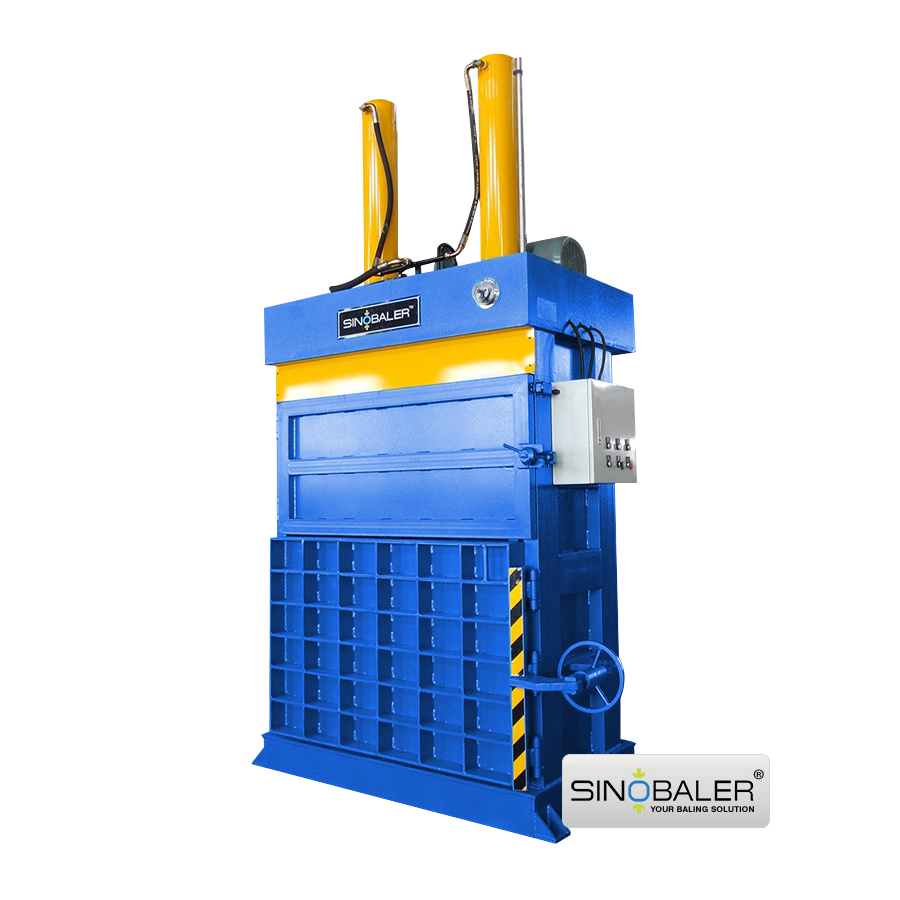
The Sinobaler Heavy Duty Dual Ram Baler delivers 80–200 tons of press force via its dual-ram system, ideal for compacting tough, fibrous, or rebounding materials, as well as soft ones requiring high bale density for optimized loading. It's perfect for natural and synthetic fibers, metal panels, tubes, profiles, and hard plastics like electronics shells and pipes. This baler reduces storage space, cuts transport costs, and boosts efficiency—making it a smart investment for modern recycling and waste handling.
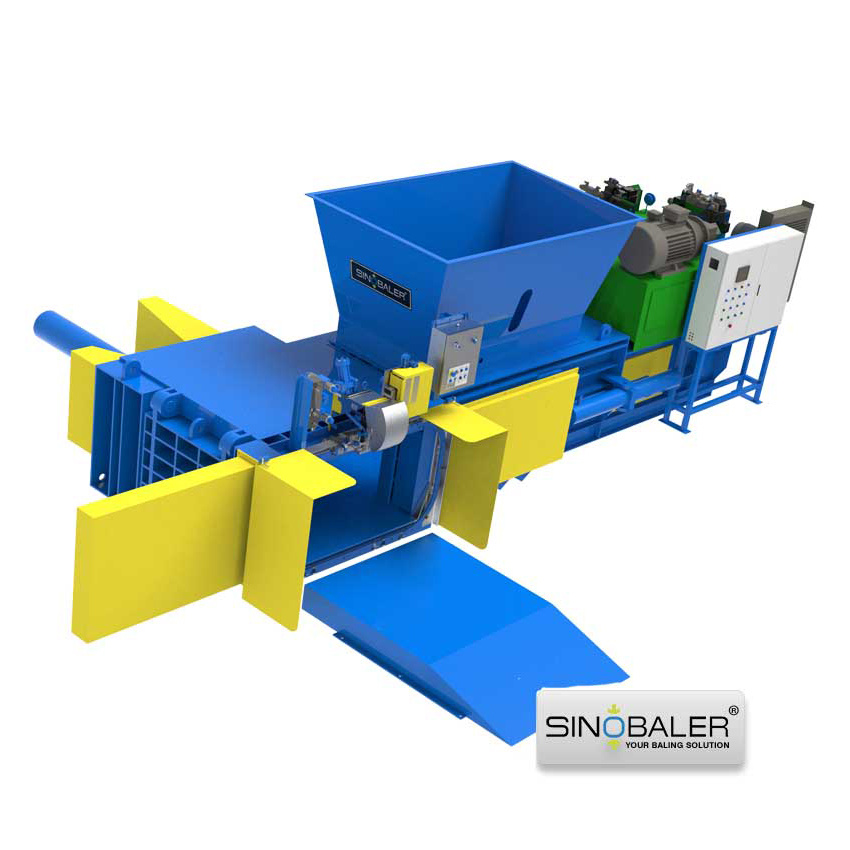
L-type Two Ram Automatic Horizontal Baler
The L-type two ram automatic horizontal baler is ideal for baling a wide range of recyclable waste. Compared to single ram balers, it offers greater versatility, supports both wire and plastic strapping, and produces high-density bales thanks to its separate strapping unit. Its flexible design can include features like a pre-compression lid to prevent cutting sensitive materials like textiles. Perfect for high-volume recycling centers, fodder exporters needing plastic straps, and municipal waste handlers seeking to avoid jams common in single ram balers.

Metal Baler (metal press) is a hydraulic machine that compresses loose metal scrap into dense, stackable blocks, making storage and transport easier. It's a smart, eco-friendly solution for efficient metal recycling. Ideal for machining plants, scrap yards, recycling centers, the automotive industry, and construction sites, it helps save space and improve scrap handling. The metal baler can process various types of metal waste, offering versatility and reliability across multiple industries, and is a key tool for boosting recycling efficiency and promoting sustainable waste management.

This metal scrap briquetting baler is ideal for compressing small metal items like oil filters, aluminum cans, steel food cans, and iron chips. With high pressure force, compact chamber, and automatic sliding door, it forms tight square blocks without the need for strapping or bagging. Fully PLC-controlled, it operates automatically—from detecting full load to compressing and ejecting. Optional conveyor enables auto feeding. Perfect for metal manufacturers, collectors, and recyclers, it offers over 10:1 compression, saving space and maximizing ROI.
Media and Gallery
Follow us


PRIVACY POLICY
We collect information from you when you fill out an inquiry or contact form. When submitting the form on our site, you may be asked to enter your name and contact details such as: e-mail address, mailing address and/or phone number, etc. Alternatively, you can choose not to complete our forms and visit our site anonymously. Any of the information we collect from you may be used to help us to better respond to your individual needs, and/or enable us to more effectively respond to your customer service requests and support needs. The email address you provided may also be used to send you information and updates pertaining to your inquiry and/or order, in addition to receiving occasional company news, updates, related product or service information, etc. SINOBALER does not sell, trade, or otherwise transfer to outside parties your personally identifiable information. This does not include trusted third parties who assist us in operating our website, conducting our business, or servicing you, so long as those parties agree to keep this information confidential. We may also release your information when we believe release is appropriate to comply with the law, enforce our site policies, or protect ours or others rights, property, or safety.
By using our site, you consent to our online privacy policy. If we decide to change our privacy policy, we will post those changes on this page. If you have any questions or concerns regarding our privacy policy, please e-mail info@sinobaler.com or mail your question to us at 1206 Yinzhou Shanghui Nan Lou, 1299 Yinxian Avenue, Yinzhou District, Ningbo 315192, P.R. China.
EXTERNAL LINKS & DISCLAIMER
Our web site has links to many other organizations with their permission. Upon leaving the SINOBALER web site, you are subject to the privacy policy of the new site which are not under our control. SINOBALER is not responsible for the content of any linked site or any link contained in a linked site. These links are provided to you as a service for you to better understand the different business relationships that SINOBALER has established, and/or to point the reader to other possible relevant resources.