







Carpets and Rugs
Carpets and rugs, due to their bulky nature, can create significant waste management challenges for industries that manufacture, install, or recycle these floor coverings. A Carpets and Rugs Baler offers a solution by compressing these materials into dense, compact bales, making them easier to handle, store, transport, and recycle. This process not only improves operational efficiency but also contributes to environmental sustainability.
What is a Carpets and Rugs Baler?
A Carpets and Rugs Baler is a heavy-duty machine specifically designed to compress large, bulky materials like old or discarded carpets, rugs, and remnants into compact bales. These machines help industries dealing with large volumes of textile floor coverings to reduce the waste's volume, streamlining storage and transportation. Balers are commonly used in carpet recycling facilities, flooring contractors, and manufacturers.
Why Recycling Carpets and Rugs is Important
Recycling carpets and rugs is essential for several reasons:
Reducing Landfill Waste: Carpets and rugs can take years to decompose in landfills due to their synthetic fiber content, such as nylon or polyester. Recycling them reduces the amount of waste sent to landfills, helping preserve valuable space and reducing environmental impact.
Resource Conservation: Carpets and rugs are made from materials such as plastic, nylon, and natural fibers. Recycling these textiles helps conserve the resources used in producing virgin materials, like petroleum, water, and energy.
Minimizing Greenhouse Gas Emissions: The disposal of carpets in landfills results in methane emissions, a potent greenhouse gas. Recycling these materials prevents them from contributing to climate change and promotes a circular economy by allowing reused materials to re-enter the production cycle.
Upcycling Opportunities: Recycled carpets can be used to create new products, such as insulation materials, automotive parts, and even new carpets. This reduces the need for raw materials and enhances the sustainability of the manufacturing process.
Benefits of Using a Carpets and Rugs Baler
Space Savings: The bulky nature of carpets and rugs makes them challenging to store. A carpet baler reduces the volume of these materials, freeing up valuable storage space and ensuring a more organized workspace.
Reduced Transportation Costs: Compressed bales take up less space, which allows for more efficient transportation. This means fewer trips to recycling centers or waste facilities, reducing fuel consumption and overall transportation costs.
Environmental Impact: Using a carpet and rug baler supports sustainability efforts by promoting recycling and reducing waste. Compacting carpets for recycling rather than sending them to landfills helps reduce environmental pollution and conserve resources.
Cost-Effective Waste Management: For companies handling large volumes of carpet waste, using a baler helps reduce disposal costs by minimizing the space the waste occupies. Businesses can save on waste handling, storage, and transportation expenses.
Improved Workplace Safety: Loose carpets and rugs can create tripping hazards and clutter in work areas. Baling these materials into compact, manageable bundles helps keep the workspace clean and safe.
Applications of Carpets and Rugs Balers
Carpet Recycling Facilities: Carpet balers are essential in recycling centers that process discarded carpets and rugs. These facilities rely on balers to prepare the materials for further processing or transportation to recycling plants.
Flooring Contractors: Flooring installation companies generate large amounts of carpet waste, such as old carpets removed during renovations or offcuts from installations. A carpet baler helps these businesses manage waste more efficiently, reducing disposal costs and facilitating recycling.
Carpet Manufacturers: Manufacturing facilities that produce carpets often have scrap material from the production process. Using a baler allows these manufacturers to manage their textile waste more effectively and contribute to recycling efforts.
Commercial and Industrial Facilities: Large businesses that replace or maintain carpeting in their buildings, such as hotels, offices, or schools, can use balers to manage their carpet waste and streamline recycling efforts.
How to Recycle Carpets and Rugs
Recycling carpets and rugs typically involves several steps:
Collection: Old carpets and rugs are collected from homes, businesses, or contractors after removal. These materials are sorted based on their material composition (e.g., nylon, polyester, wool).
Shredding: Carpets are cut into smaller pieces and shredded. This step is essential to breaking down the materials and separating them for further processing.
Material Separation: Some carpets contain multiple materials, such as synthetic fibers mixed with natural backing. Advanced recycling facilities separate these materials using various techniques, such as mechanical sorting or chemical processes.
Recycling into New Products: The separated fibers can be repurposed into new products, including new carpets, car parts, insulation, or construction materials.
Reuse: In some cases, carpets and rugs in good condition are cleaned and refurbished for resale or donation, extending their useful life and keeping them out of landfills.
A Carpets and Rugs Baler is an essential tool for industries dealing with large volumes of textile floor coverings. By compressing bulky carpets and rugs into compact bales, businesses can optimize their waste management processes, save on transportation and storage costs, and contribute to recycling efforts. Reach out to SINOBALER to invest in a high-quality baler to enhance your operational efficiency, reduce waste disposal costs, and contribute to a more sustainable future.
Quick links:
SINOBALER lifting chamber textile balers
VIDEOS
PICTURES
APPLICABLE MACHINE

Vertical Bagging Baler Machine
Vertical bagging baler machines are perfect for compressing and bagging small, loose materials for easy handling and transport. They press materials into compact bales and bag them in one step, ideal for factories handling pet food, animal bedding, fertilizers, fabrics, and more. Suitable materials include peanut shells, cotton seeds, chopped straw, hay, wood shavings, fibers, and rice hulls. One person can produce up to 30 bales per hour, each weighing 44–66 lbs. The removable bag feature adds versatility, allowing the machine to bale other materials without bagging when needed.

Scale Weighing Horizontal Bagging Baler
Scale weighing horizontal bagging baler is ideal for packing loose materials like rags, straw, hay, wood shavings, pet food, and textile scraps. Commonly used in pet food plants, farms, fertilizer factories, and recycling centers, it helps turn loose waste into valuable, bagged bales. Equipped with PLC control, one-button operation, and a hopper sensor switch, it can produce 25kg bales (700×400×310mm) at up to 60 bales/hour. The built-in scale ensures precise bale weight. It automatically compresses, bags, and ejects materials for easy handling, storage, and transport.

Heavy Duty Horizontal Bagging Machine
One main use of a horizontal baling and bagging machine is for loose materials like sawdust, wood chips, rags, peanut shells, cotton seeds, and rice hulls. These are hard to handle, but this machine automatically feeds, compresses, and bags them for easier storage, transport, or resale. Sinobaler’s Horizontal Baling & Bagging Machine features PLC control, one-button operation, and a safety sensor switch. It produces 60 bales/hour (88 lbs each, 28×16×12 in). Ideal for textile recyclers, pet food plants, farms, fertilizer factories, and any site generating loose waste.

Lifting Chamber Baler / Textile Baler / Clothes Baler
A lifting chamber baler, also called a used clothes or textile baler, is ideal for textile waste recycling. It's perfect for textile manufacturers, used clothing recyclers, second-hand shops, exporters, and rag graders. The lifting chamber design simplifies strapping, wrapping, and bale ejection for easy one-person operation, cutting labor costs. Bale weights range from 30kg to 600kg with up to 150 tons of force. For higher efficiency, the twin lifting chamber model allows simultaneous feeding and baling.

Swivel Twin Lifting Chamber Baler
The Swivel Twin Lifting Chamber Baler features a modern design and advanced engineering, making it an efficient solution for textile waste handling. It has two chambers connected by a central pivot—one chamber loads materials while the other compresses, bales, and straps them. This synchronized operation balances loading and processing, improving productivity. When a bale reaches its set compression, the chamber lifts automatically, signaling cycle completion and reducing downtime. Ideal for textile waste exporters and used clothing dealers, this baler offers efficiency, user-friendliness, and labor savings.
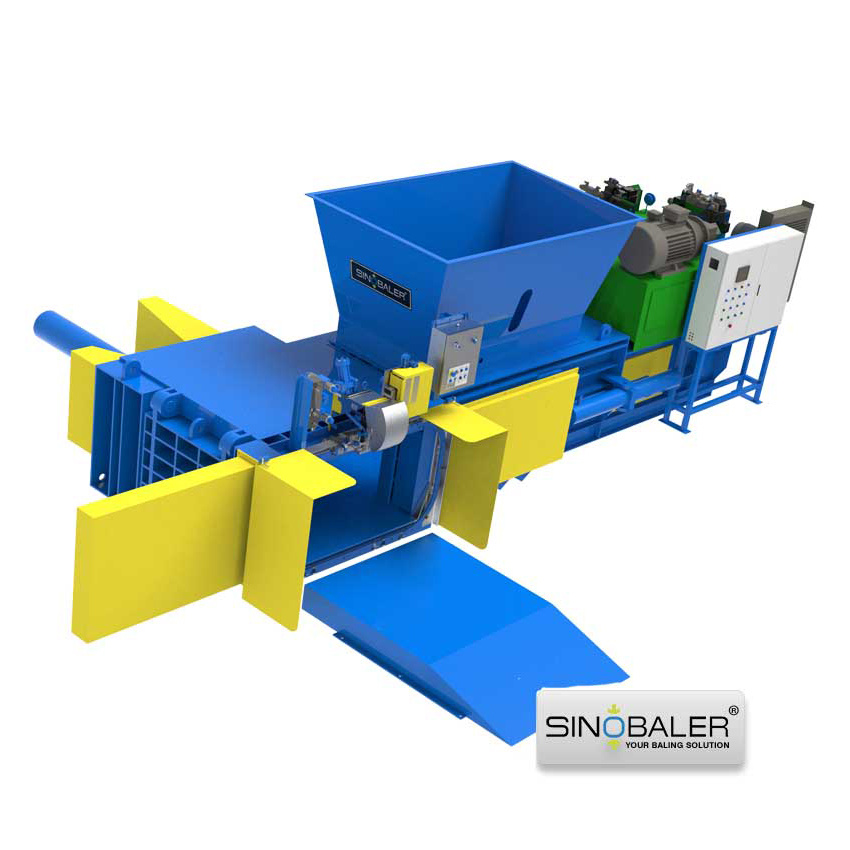
L-type Two Ram Automatic Horizontal Baler
The L-type two ram automatic horizontal baler is ideal for baling a wide range of recyclable waste. Compared to single ram balers, it offers greater versatility, supports both wire and plastic strapping, and produces high-density bales thanks to its separate strapping unit. Its flexible design can include features like a pre-compression lid to prevent cutting sensitive materials like textiles. Perfect for high-volume recycling centers, fodder exporters needing plastic straps, and municipal waste handlers seeking to avoid jams common in single ram balers.
Media and Gallery
Follow us


PRIVACY POLICY
We collect information from you when you fill out an inquiry or contact form. When submitting the form on our site, you may be asked to enter your name and contact details such as: e-mail address, mailing address and/or phone number, etc. Alternatively, you can choose not to complete our forms and visit our site anonymously. Any of the information we collect from you may be used to help us to better respond to your individual needs, and/or enable us to more effectively respond to your customer service requests and support needs. The email address you provided may also be used to send you information and updates pertaining to your inquiry and/or order, in addition to receiving occasional company news, updates, related product or service information, etc. SINOBALER does not sell, trade, or otherwise transfer to outside parties your personally identifiable information. This does not include trusted third parties who assist us in operating our website, conducting our business, or servicing you, so long as those parties agree to keep this information confidential. We may also release your information when we believe release is appropriate to comply with the law, enforce our site policies, or protect ours or others rights, property, or safety.
By using our site, you consent to our online privacy policy. If we decide to change our privacy policy, we will post those changes on this page. If you have any questions or concerns regarding our privacy policy, please e-mail info@sinobaler.com or mail your question to us at 1206 Yinzhou Shanghui Nan Lou, 1299 Yinxian Avenue, Yinzhou District, Ningbo 315192, P.R. China.
EXTERNAL LINKS & DISCLAIMER
Our web site has links to many other organizations with their permission. Upon leaving the SINOBALER web site, you are subject to the privacy policy of the new site which are not under our control. SINOBALER is not responsible for the content of any linked site or any link contained in a linked site. These links are provided to you as a service for you to better understand the different business relationships that SINOBALER has established, and/or to point the reader to other possible relevant resources.