







Home | Blog |

Automation Trends in Waste Management: The Future of Smart Recycling & Resource Recovery
✅ Request Solution | FAQ | Request Layout Design | Watch Demo
Why Automation Is Reshaping Waste Management
The global waste management industry is undergoing a massive technological transformation. Rising waste volumes, labor shortages, stricter environmental regulations, and the push toward a circular economy are accelerating the adoption of automation technologies.
Smart waste management solutions — powered by AI, robotics, IoT sensors, and automated machinery — are helping recycling companies operate faster, safer, and more profitably than ever before.
The smart waste management market alone is projected to grow rapidly, driven by digital infrastructure investment and sustainability initiatives worldwide.
For recycling plants, logistics operators, and material recovery facilities (MRFs), automation is no longer optional — it is becoming the core competitive advantage.
1. AI & Robotics Revolutionizing Waste Sorting


Intelligent Sorting Replaces Manual Labor
Traditional recycling depended heavily on manual sorting, which is slow, inconsistent, and hazardous. Today, AI-powered robots and vision systems can automatically identify materials such as plastics, paper, metals, and fibers with extremely high accuracy.
Key benefits include:
- Sorting accuracy exceeding 90%
- Up to 2× faster picking speeds than humans
- Reduced contamination in recyclable streams
- Safer working environments
AI recycling robots can perform 70–100 picks per minute, significantly improving throughput and material purity.
Automated front-end systems, optical sorters, and AI inspection lines now allow waste facilities to recover more valuable materials while minimizing human intervention.
👉 Industry Impact:
Higher-quality recyclables mean higher resale prices and improved recycling profitability.
2. Smart Waste Collection & IoT-Driven Operations
Automation extends far beyond recycling plants.
Modern waste collection systems use:
- Smart bins with fill-level sensors
- Real-time route optimization software
- GPS-connected fleet management
- Data analytics platforms
Municipal operators increasingly deploy AI tools to optimize collection routes, reduce fuel consumption, and improve transparency across waste handling operations.
Advantages
✔ Reduced transportation costs
✔ Lower emissions
✔ Improved service reliability
✔ Real-time operational visibility
Automation transforms waste collection from a fixed schedule model into a dynamic, demand-based system.
3. Automated Baling Systems: The Backbone of Recycling Automation


While AI sorting often receives attention, automated baling technology is one of the most important — and profitable — automation upgrades in waste management.
After sorting, recyclable materials must be:
- Compacted
- Densified
- Standardized
- Prepared for storage or export
This is where SINOBALER Automatic Balers play a critical role.
Why Automatic Balers Are Essential
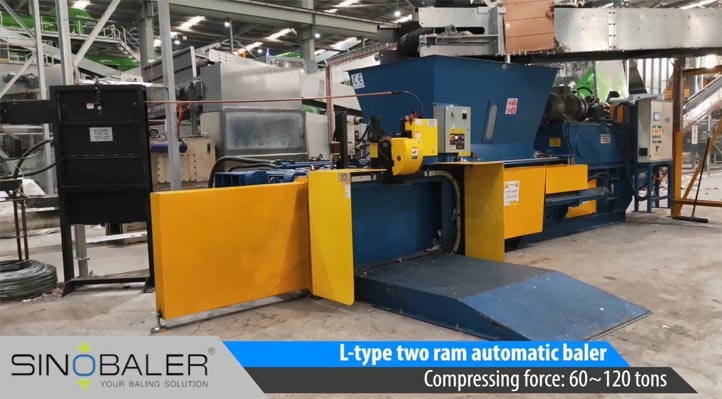
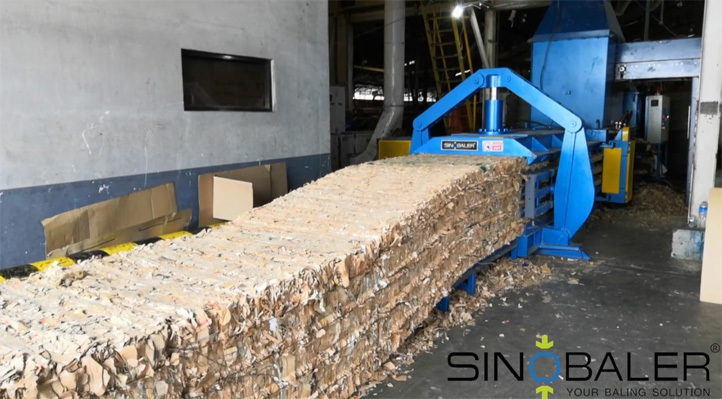
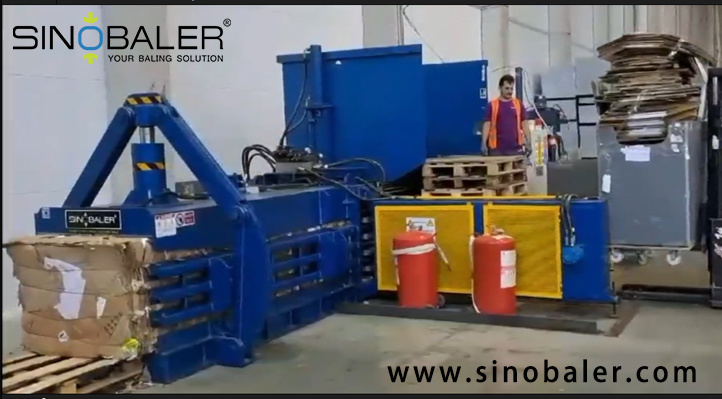
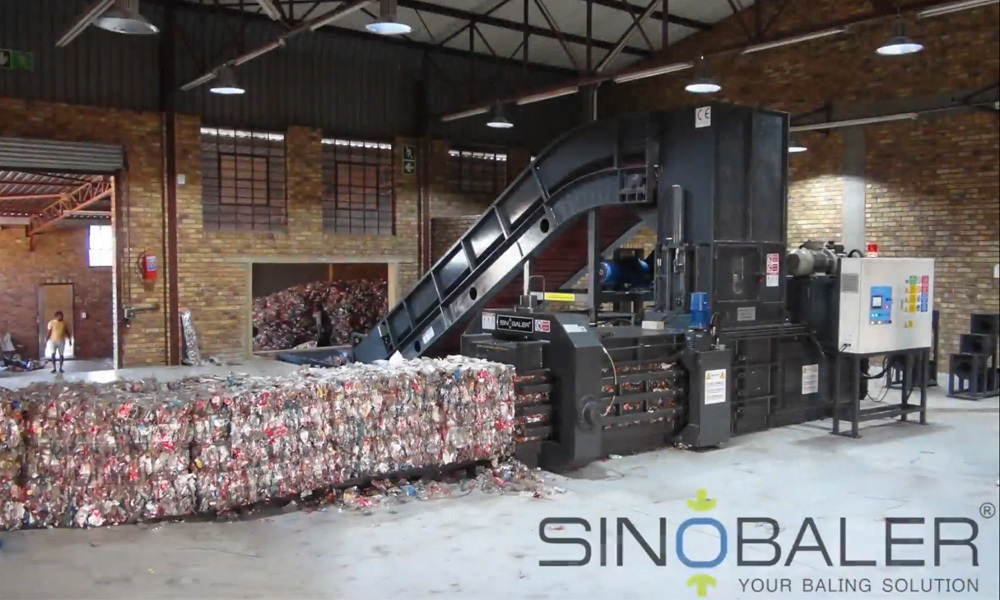
Automatic balers convert loose recyclables into high-density bales ready for transport and resale.
Key Automation Benefits
1. Continuous Operation
- Fully automatic feeding, compression, tying, and discharge
- Minimal operator involvement
2. Higher Throughput
- Designed for high-volume recycling facilities
- Ideal for cardboard, plastics, paper, textiles, RDF, and biomass
3. Logistics Optimization
- Reduced storage space
- Lower transportation cost per ton
4. Labor Reduction
- Automation compensates for industry-wide labor shortages
In modern MRFs, automated balers act as the final profit-making stage of the recycling process.
SINOBALER Automatic Balers in Smart Recycling Lines
SINOBALER integrates seamlessly into automated waste processing systems:
Typical Automated Recycling Line
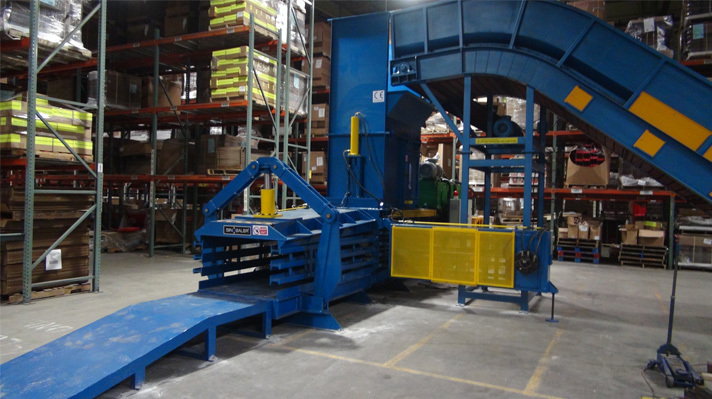
- Conveyor Feeding System
- AI / Optical Sorting
- Material Separation (such as metal separator)
- Shredding or Granulation
- SINOBALER Fully Automatic Baler
- Automatic Bale Conveying & Storage
By combining intelligent sorting with automated baling, operators achieve:
- Higher bale density
- Consistent bale quality
- Export-ready recyclables
- Improved ROI
4. Data-Driven Waste Management & Predictive Maintenance
Automation today is increasingly data-centered.
Advanced waste facilities deploy:
- Machine performance monitoring
- Predictive maintenance algorithms
- Automated compliance reporting
- Digital waste tracking systems
AI platforms can predict equipment failures before downtime occurs, helping companies avoid costly interruptions.
Result:
➡ Higher equipment uptime
➡ Lower maintenance cost
➡ Stable production performance
Automatic balers equipped with smart control systems are becoming part of these connected industrial ecosystems.
5. Smart Facilities & Fully Automated Recycling Plants
The next evolution is the lights-out recycling facility — plants operating with minimal human supervision.
Emerging technologies include:
- Robotic material handling
- Autonomous conveyors
- Edge AI waste recognition
- Integrated bio-digesters
- Cloud-connected plant management
Automation enables waste management companies to transition from disposal businesses into resource recovery manufacturers.
Research shows robotic waste segregation systems can reach sorting accuracy up to 98%, demonstrating the scalability of intelligent automation.
6. Sustainability & Circular Economy Acceleration
Automation directly supports environmental goals:
- Higher recycling recovery rates
- Reduced landfill dependence
- Lower carbon footprint
- Improved material reuse
Governments and corporations worldwide are investing heavily in automated waste solutions as part of circular economy initiatives.
Automatic balers — especially high-efficiency models like SINOBALER baling and recycling systems — enable recyclables to enter global commodity markets efficiently, turning waste into valuable resources.
7. Future Trends: What Comes Next?
The next decade of waste management automation will focus on:
✅ AI-powered autonomous recycling plants
✅ Digital twins of waste facilities
✅ Robotics + human collaboration
✅ Fully automated bale logistics
✅ Smart city waste ecosystems
✅ Integration of biomass and alternative fuels
Automation will transform waste companies from service providers into high-tech material recovery operations.
Automation Is the New Standard in Waste Management
Automation is redefining how waste is collected, sorted, processed, and monetized.
From AI sorting robots to smart logistics and SINOBALER automatic balers, modern recycling systems are becoming:
- Faster
- Cleaner
- Safer
- More profitable
Companies that invest in automation today will lead tomorrow’s circular economy.
✅ SINOBALER Automatic Balers represent a critical step toward fully automated recycling operations — converting processed waste into standardized, transport-efficient commodities ready for global markets.
Other Blogs

How Baling Increases Recycling Profits
2026/04/29
In modern recycling and agricultural industries, profitability is no longer determined only by material price — handling efficiency, logistics optimization, and material density play a decisive role. Baling technology has become one of the most powerful tools for transforming bulky materials into standardized, high-value commodities. Whether managing recyclable cardboard or exporting premium alfalfa hay, baling directly increases revenue while reducing operating costs.

Horizontal vs Vertical Baler for Recycling Centers
2026/04/28
Recycling centers today face increasing pressure to process more material, reduce labor costs, and improve bale quality. One of the most important investment decisions is selecting the right baler type. Should your facility choose a horizontal baler or a vertical baler? This guide compares both options and explains why many recycling facilities worldwide upgrade to SINOBALER baling systems for long-term performance and profitability.

Material Recovery Facility (MRF) Recycling Solutions
2026/04/16
Whether upgrading an existing recycling plant or designing a new Material Recovery Facility, SINOBALER provides reliable automatic baling solutions tailored to your material stream and capacity requirements.

How to Choose the Right Cardboard Baler for Your Warehouse?
2026/03/26
Efficient cardboard waste management is a key part of running a clean, cost-effective warehouse. A SINOBALER cardboard baler can help you reduce storage space, lower disposal costs, and streamline recycling operations. But with so many options, how do you choose the right one?
Related Videos


Other Blogs
How Baling Increases Recycling Profits
2026/04/29
In modern recycling and agricultural industries, profitability is no longer determined only by material price — handling efficiency, logistics optimization, and material density play a decisive role. Baling technology has become one of the most powerful tools for transforming bulky materials into standardized, high-value commodities. Whether managing recyclable cardboard or exporting premium alfalfa hay, baling directly increases revenue while reducing operating costs.
Horizontal vs Vertical Baler for Recycling Centers
2026/04/28
Recycling centers today face increasing pressure to process more material, reduce labor costs, and improve bale quality. One of the most important investment decisions is selecting the right baler type. Should your facility choose a horizontal baler or a vertical baler? This guide compares both options and explains why many recycling facilities worldwide upgrade to SINOBALER baling systems for long-term performance and profitability.
Material Recovery Facility (MRF) Recycling Solutions
2026/04/16
Whether upgrading an existing recycling plant or designing a new Material Recovery Facility, SINOBALER provides reliable automatic baling solutions tailored to your material stream and capacity requirements.
How to Choose the Right Cardboard Baler for Your Warehouse?
2026/03/26
Efficient cardboard waste management is a key part of running a clean, cost-effective warehouse. A SINOBALER cardboard baler can help you reduce storage space, lower disposal costs, and streamline recycling operations. But with so many options, how do you choose the right one?
Media and Gallery
Follow us


PRIVACY POLICY
We collect information from you when you fill out an inquiry or contact form. When submitting the form on our site, you may be asked to enter your name and contact details such as: e-mail address, mailing address and/or phone number, etc. Alternatively, you can choose not to complete our forms and visit our site anonymously. Any of the information we collect from you may be used to help us to better respond to your individual needs, and/or enable us to more effectively respond to your customer service requests and support needs. The email address you provided may also be used to send you information and updates pertaining to your inquiry and/or order, in addition to receiving occasional company news, updates, related product or service information, etc. SINOBALER does not sell, trade, or otherwise transfer to outside parties your personally identifiable information. This does not include trusted third parties who assist us in operating our website, conducting our business, or servicing you, so long as those parties agree to keep this information confidential. We may also release your information when we believe release is appropriate to comply with the law, enforce our site policies, or protect ours or others rights, property, or safety.
By using our site, you consent to our online privacy policy. If we decide to change our privacy policy, we will post those changes on this page. If you have any questions or concerns regarding our privacy policy, please e-mail info@sinobaler.com or mail your question to us at 1206 Yinzhou Shanghui Nan Lou, 1299 Yinxian Avenue, Yinzhou District, Ningbo 315192, P.R. China.
EXTERNAL LINKS & DISCLAIMER
Our web site has links to many other organizations with their permission. Upon leaving the SINOBALER web site, you are subject to the privacy policy of the new site which are not under our control. SINOBALER is not responsible for the content of any linked site or any link contained in a linked site. These links are provided to you as a service for you to better understand the different business relationships that SINOBALER has established, and/or to point the reader to other possible relevant resources.