







Home | Blog |

30-Liter Paint Can Crusher for Industrial Drum Recycling
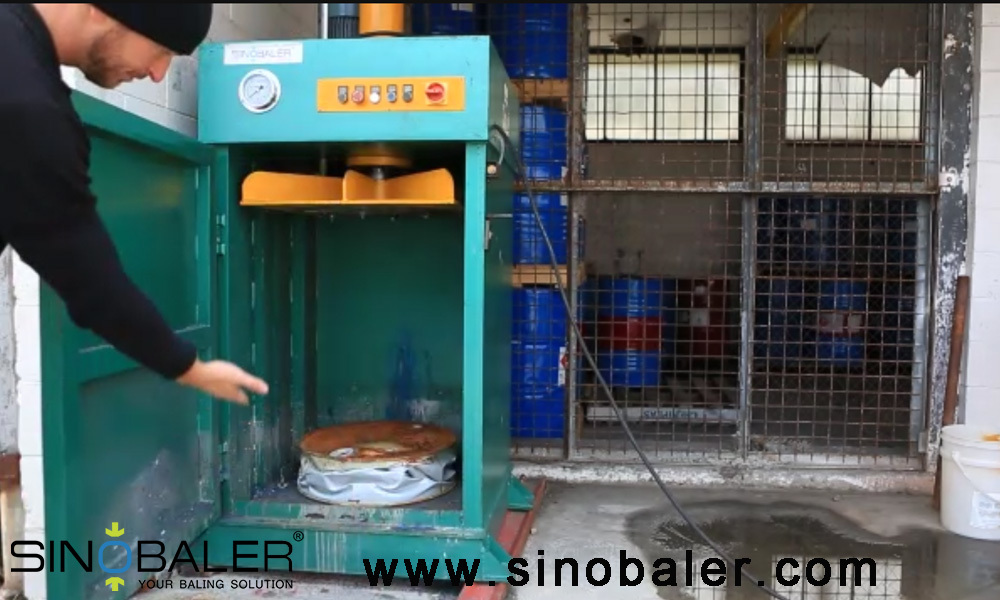
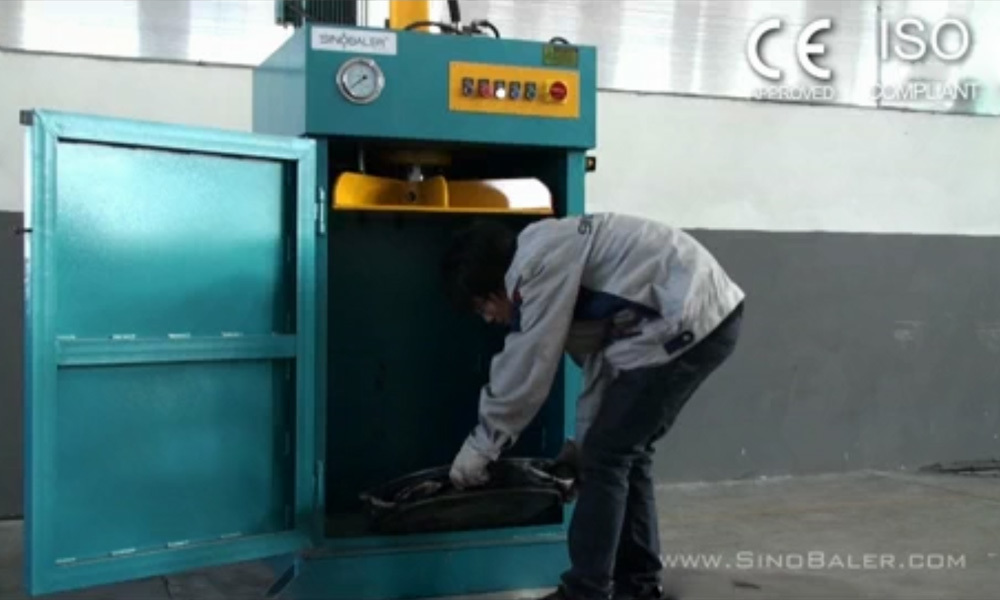
Case Study: SVB2-MD-300 Drum Crusher for 30-Liter Paint Cans
A customer needed a compact industrial solution to crush 30-liter metal paint cans before transferring the compressed metal to scrap recycling.
The customer processes approximately 800 kg of metal drums per week. The paint buckets have a diameter of approximately 300 mm.
Based on the drum dimensions, material and processing volume, SINOBALER recommended the standalone drum crusher Model SVB2-MD-300.
The machine's 760 × 760 × 1000 mm compression chamber provides sufficient space to arrange multiple 300 mm-diameter drums for crushing, while the integrated liquid drainage channel and perforating needles on the press platen address important considerations when processing used paint containers.
Customer Requirements
The project had three main requirements:
1. Crush Metal Paint Drums for Scrap Recycling
The customer will process metal drums and transfer the crushed material to scrap recycling after crushing.
The objective is to reduce the volume of the empty containers and make the material more convenient for subsequent handling and transportation.
2. Process 30-Liter Paint Buckets
The customer's paint buckets have an approximate diameter of:
300 mm
The container size was an important factor in determining the suitable crusher chamber dimensions.
3. Process Approximately 800 kg per Week
The expected processing volume is:
Approx. 800 kg/week
This is a relatively moderate processing requirement, making a standalone drum crusher suitable without requiring a large automated drum-processing line.
Customer Application at a Glance
Requirement | Customer Information |
Material | |
Nominal container size | 30 liters |
Drum diameter | Approx. 300 mm |
Processing volume | Approx. 800 kg/week |
Downstream use | Scrap recycling |
Required process | Crushing / volume reduction |
Recommended machine | |
Compression chamber | W760 × D760 × H1000 mm |
Recommended Solution: SVB2-MD-300 Drum Crusher
After reviewing the customer's material and processing requirements, SINOBALER confirmed that the SVB2-MD-300 standalone drum crusher is well suited to this project.
The machine is designed to compress and crush suitable metal drums and containers, reducing their occupied volume for easier handling, storage and subsequent scrap recycling.
For this particular application, three important machine features are especially relevant:
- 760 × 760 × 1000 mm compression chamber
- Bottom liquid drainage channel
- Perforating needles on the press platen
These features directly address the customer's drum dimensions and the potential presence of residual liquid inside used paint containers.
Why the 760 × 760 × 1000 mm Chamber Fits the Application
The customer's paint buckets have a diameter of approximately 300 mm.
The SVB2-MD-300 has a compression chamber measuring:
W760 × D760 × H1000 mm
Based on the approximately 300 mm drum diameter, three drums can be arranged across the chamber area for crushing.
The arrangement can be understood approximately as:
300 mm + 300 mm + 300 mm = 900 mm
Therefore, the three-drum arrangement should be understood as a stacking/placement consideration rather than three drums fitting side-by-side across the 760 mm chamber width. The actual loading arrangement must follow the machine's chamber geometry and operating instructions.
For the customer's application, the important limitation is that the height of each stack should be less than 1000 mm.
This provides a practical loading configuration for processing multiple paint buckets in one crushing cycle.
Key dimensions
Drum diameter: approximately 300 mm
Maximum chamber height: 1000 mm
Chamber: W760 × D760 × H1000 mm
Liquid Drainage for Used Paint Containers
Used paint cans may contain residual liquid or other material.
For this reason, the SVB2-MD-300 is equipped with a liquid drainage channel at the bottom of the machine.
During crushing, residual liquid can flow toward the drainage channel and be collected rather than remaining uncontrolled inside the machine.
A pipe can be connected to the discharge port of the drainage channel.
If required, an additional pump can then transfer the collected residual liquid to an appropriate location or collection system.
Drainage arrangement
Crushed drum → Residual liquid → Bottom drainage channel → Discharge port → Pipe → Suitable collection point
This drainage arrangement is particularly useful for applications involving previously used containers where residual liquid may remain inside.
Perforating Needles Help Release Air During Crushing
Another important feature is installed on the press platen.
The platen is equipped with perforating needles designed to release trapped air during the crushing process.
When hollow metal containers are compressed, air can remain trapped inside the containers.
The perforating needles help release this air as the press platen moves downward.
This supports a more controlled crushing process for hollow metal paint cans and similar containers.
Key feature
Perforating needles on the press platen → Release air from containers during crushing
How the 30-Liter Paint Can Crushing Process Works
The basic operating process for this application is:
Step 1 — Load the Metal Paint Cans
Place the suitable empty metal paint cans into the compression chamber.
The 300 mm-diameter containers should be arranged according to the machine's loading requirements.
Step 2 — Check the Stack Height
The height of each stack should remain below 1000 mm.
Step 3 — Close the Chamber
After loading, close the machine according to the operating procedure.
Step 4 — Start Crushing
The hydraulic pressing system moves the press platen downward and compresses the metal containers.
Step 5 — Release Trapped Air
The perforating needles on the press platen help release air from the hollow containers during compression.
Step 6 — Drain Residual Liquid
Any suitable residual liquid released during crushing can flow into the bottom drainage channel.
A connected pipe can direct the liquid to an appropriate collection point, with an additional pump if necessary.
Step 7 — Remove the Crushed Metal
After the crushing cycle, the compressed metal containers can be removed for temporary storage, transportation or transfer to scrap recycling.
From 30-Liter Paint Cans to Scrap Metal
The customer's material flow can be summarized as:
30-Liter Metal Paint Cans
↓
Load into SVB2-MD-300
↓
Hydraulic Crushing
↓
Air Release + Liquid Drainage
↓
Compressed Metal Containers
↓
Transfer to Scrap Recycling
The crushing stage reduces the bulky shape of the original paint buckets, making the material more convenient to handle and transport.
Why a Standalone Drum Crusher Was Suitable
The customer's processing requirement is approximately 800 kg per week.
This is an important factor in machine selection.
The customer did not require a large automated drum-processing line. Instead, the project called for a standalone industrial drum crusher capable of handling the required paint-can volume.
The SVB2-MD-300 therefore provides a relatively straightforward solution:
- Standalone machine
- Hydraulic crushing
- Suitable chamber dimensions
- Multiple-container loading arrangement
- Liquid drainage channel
- Air-release perforating needles
- Suitable for scrap-oriented volume reduction
The final machine configuration should always be confirmed against the actual container material, condition and operating requirements.
Paint Can Crusher Application: Key Technical Considerations
When selecting a crusher for paint cans or metal drums, several factors should be evaluated.
Drum Diameter
The customer's drums have a diameter of approximately 300 mm.
Drum diameter determines how many containers can be positioned within the compression chamber.
Drum Height
Container height affects the number of drums that can be stacked and the required chamber height.
For this project, each stack should remain below 1000 mm.
Material
The customer will process metal drums.
Material type and thickness affect the crushing force and machine configuration.
Residual Liquid
Used paint containers may contain residual liquid.
A drainage arrangement should therefore be considered where applicable.
Trapped Air
Hollow containers can contain air during compression.
The SVB2-MD-300 uses perforating needles on the press platen to help release air during crushing.
Processing Volume
The customer's requirement is approximately 800 kg per week.
Processing volume helps determine whether a standalone crusher or a higher-capacity automated system is appropriate.
30-Liter Paint Can Crusher: Frequently Asked Questions
Can the SVB2-MD-300 crush 30-liter paint cans?
Yes. Based on the customer's approximately 300 mm drum diameter, SINOBALER confirmed that the SVB2-MD-300 is well suited to this application.
The actual operation should follow the machine's loading and safety requirements.
How large is the crushing chamber?
The compression chamber measures:
W760 × D760 × H1000 mm
How many 300 mm paint cans can be loaded?
The customer's approximately 300 mm diameter is suitable for arranging multiple containers in the chamber. The exact loading pattern should follow the chamber geometry and machine operating instructions.
The stack height should remain below 1000 mm.
What happens if residual liquid remains in the paint cans?
The machine has a liquid drainage channel at the bottom. A pipe can be connected to the drainage outlet to direct suitable residual liquid to an appropriate collection location, with an additional pump if required.
How does the machine release air from the paint cans?
Perforating needles are installed on the press platen to help release air from hollow containers during crushing.
Can the crushed paint cans be sent to a scrap recycler?
Yes. The customer's intended process is to transfer the crushed metal drums to scrap recycling after crushing.
The suitability of the resulting scrap for a particular recycler should be confirmed with the downstream recycling facility.
Can the machine process other metal drums?
The suitability for other drums depends on their material, dimensions, thickness, contents and condition. Please provide the actual drum specifications before selecting the machine.
Looking for a Paint Can or Metal Drum Crusher?
If you process paint cans, metal buckets, drums or similar hollow metal containers, SINOBALER can evaluate the application based on your actual drum dimensions and processing volume.
Please send us:
Drum material: Steel / Aluminum / Other
Drum capacity: ___ liters
Diameter: ___ mm
Height: ___ mm
Drum thickness: ___ mm
Quantity: ___ kg/day or ___ kg/week
Residual contents: None / Dry residue / Liquid / Other
End use: Scrap recycling / Storage / Transportation / Other
Please also send photos or a short video of your drums if available.
Get a Drum Crusher Recommendation
Email: inquiry@sinobaler.com
Tell us your drum diameter, height, material, quantity and application, and our engineers can evaluate a suitable crushing solution.
[Request a Drum Crusher Quote]
SINOBALER — Baling and recycling equipment solutions for waste reduction and material handling.
Explore more paint drum size reduction solutions on PROSINO metallic drum shredders.
Other Blogs

Paint Container Baler
2026/01/30
A paint container baler is a specialized industrial machine designed to compress and bale empty paint cans and containers. Depending on the material, the baler can handle steel, tin, or plastic paint cans, ensuring they occupy minimal space while meeting safety and environmental standards. This process helps paint manufacturers, distributors, and recycling centers streamline waste management operations.

Paint Tin Baler
2024/11/13
In industries like construction, automotive, and manufacturing, the use of paint is a common practice. However, once the paint is used, the empty paint tins (also known as paint cans) can become a significant waste management challenge. These tins, often made of metal, can take up considerable space in waste containers and require careful disposal

Paint Drum Baler Machine
2023/04/26
A paint drum is a type of container used for storing and transporting paint and other liquid coatings. These drums are typically made of steel or other durable materials, and are designed to be strong and leak-proof. Paint drums come in a variety of sizes, from small containers used for household paint storage to large […]

Paint Drum Crusher
2018/11/22
There are basically two major types of paint packaging, plastic and tin-plated steel can. Both types of packaging are recyclable. And today we will focus on the recycling of steel paint drums as well as related paint drum crusher machines. The mostly used paint container is tin-plated steel can. The thin layer of tinplating provides […]
Related Videos



Other Blogs
2026/01/30
A paint container baler is a specialized industrial machine designed to compress and bale empty paint cans and containers. Depending on the material, the baler can handle steel, tin, or plastic paint cans, ensuring they occupy minimal space while meeting safety and environmental standards. This process helps paint manufacturers, distributors, and recycling centers streamline waste management operations.
2024/11/13
In industries like construction, automotive, and manufacturing, the use of paint is a common practice. However, once the paint is used, the empty paint tins (also known as paint cans) can become a significant waste management challenge. These tins, often made of metal, can take up considerable space in waste containers and require careful disposal
2023/04/26
A paint drum is a type of container used for storing and transporting paint and other liquid coatings. These drums are typically made of steel or other durable materials, and are designed to be strong and leak-proof. Paint drums come in a variety of sizes, from small containers used for household paint storage to large […]
2018/11/22
There are basically two major types of paint packaging, plastic and tin-plated steel can. Both types of packaging are recyclable. And today we will focus on the recycling of steel paint drums as well as related paint drum crusher machines. The mostly used paint container is tin-plated steel can. The thin layer of tinplating provides […]
Media and Gallery
Follow us


PRIVACY POLICY
We collect information from you when you fill out an inquiry or contact form. When submitting the form on our site, you may be asked to enter your name and contact details such as: e-mail address, mailing address and/or phone number, etc. Alternatively, you can choose not to complete our forms and visit our site anonymously. Any of the information we collect from you may be used to help us to better respond to your individual needs, and/or enable us to more effectively respond to your customer service requests and support needs. The email address you provided may also be used to send you information and updates pertaining to your inquiry and/or order, in addition to receiving occasional company news, updates, related product or service information, etc. SINOBALER does not sell, trade, or otherwise transfer to outside parties your personally identifiable information. This does not include trusted third parties who assist us in operating our website, conducting our business, or servicing you, so long as those parties agree to keep this information confidential. We may also release your information when we believe release is appropriate to comply with the law, enforce our site policies, or protect ours or others rights, property, or safety.
By using our site, you consent to our online privacy policy. If we decide to change our privacy policy, we will post those changes on this page. If you have any questions or concerns regarding our privacy policy, please e-mail info@sinobaler.com or mail your question to us at 1206 Yinzhou Shanghui Nan Lou, 1299 Yinxian Avenue, Yinzhou District, Ningbo 315192, P.R. China.
EXTERNAL LINKS & DISCLAIMER
Our web site has links to many other organizations with their permission. Upon leaving the SINOBALER web site, you are subject to the privacy policy of the new site which are not under our control. SINOBALER is not responsible for the content of any linked site or any link contained in a linked site. These links are provided to you as a service for you to better understand the different business relationships that SINOBALER has established, and/or to point the reader to other possible relevant resources.