





Home | Blog |

Glass Wool Recycling Line
A Glass Wool Recycling Line is an integrated system designed to process waste glass wool—commonly generated from insulation materials, construction debris, ventilation systems, and industrial manufacturing—into reusable, clean, and manageable forms. Since glass wool is lightweight, fluffy, and elastic, handling it without the right equipment can be extremely difficult. A specialized recycling line solves this challenge by breaking down, compacting, or reshaping the material for more efficient reuse or disposal.
Why Recycle Glass Wool?
Glass wool contains millions of fine fibers and is widely used for insulation due to its thermal and acoustic properties. However, bulky offcuts and waste scraps take up large storage space and are costly to transport. Recycling offers several benefits:
- Reduces landfill waste
- Improves material handling efficiency
- Cuts transportation and storage costs
- Supports environmental sustainability initiatives
- Allows reintroduction of recycled fibers into production
Key Components of a Glass Wool Recycling Line
A complete recycling line typically includes:
- Pre-Shredder / Crusher
Breaks down bulky glass wool into smaller, uniform pieces. - Dust Collection & Air Filtration System
Essential for controlling fine fibers and maintaining a safe, clean working environment. - Secondary Shredder
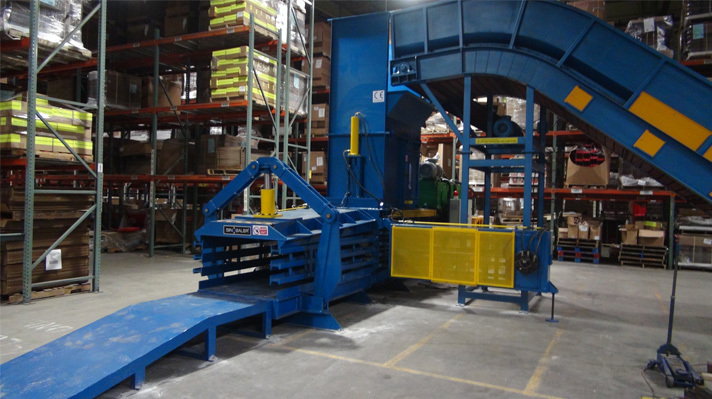
Further refines the material for consistent size reduction. - Conveyor System
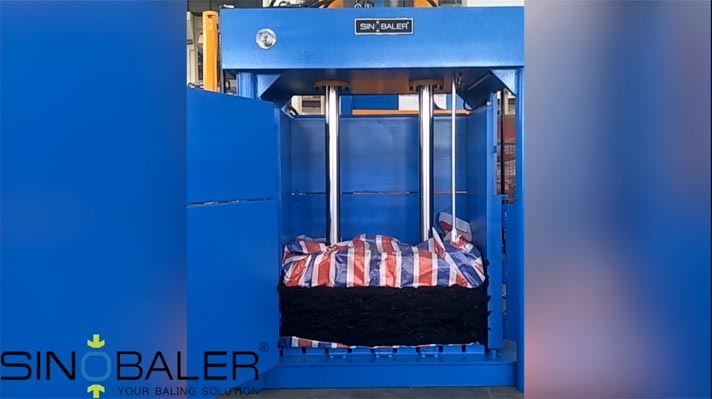
Transfers material seamlessly between stages while maintaining a closed, dust-controlled loop. - Compactor or Baling Machine
Compresses glass wool into dense, manageable bales or blocks for easy storage and transportation. - Optional Mixing or Reprocessing Unit
Allows reintegration of recycled fibers into new insulation material production.
How the Recycling Line Works
- Waste glass wool is fed into the pre-shredder.
- Shredded fibers travel through dust control systems to maintain air purity.
- Secondary shredding ensures uniform fiber size.
- The material is then compacted or baled into dense units.
- Finished bales or processed fiber can be transported, reused, or mixed into new products.
Advantages of a Glass Wool Recycling Line
- High efficiency for processing large volumes
- Improved safety due to dust control and enclosed system
- Consistent output ready for reuse or further manufacturing
- Reduced labor costs with automated materials handling
- Eco-friendly operation supporting green construction
Other Blogs

Glass Wool Baler Machine
2019/08/14
Sand and recycled glass are the raw materials of glass wool. You can see glass wool rolls or glass wool slabs with different thermal and mechanical properties in the market. Glass wool is non-flammable and insoluble in water. Also it consists of air and insulates very well. So it is a quite popular insulation material […]

Advantages of using a Fiberglass Baler
2016/10/19
Fiberglass and Fiberglass Baler: Fiberglass is a material made by mixing of different components or composite material and used widely in different fields. In other words, you can say that composition of individual glass fibers in different forms. Automotive industry uses fiberglass these days in making different parts of the vehicles especially sports cars. As […]
Related Videos

Other Blogs
2019/08/14
Sand and recycled glass are the raw materials of glass wool. You can see glass wool rolls or glass wool slabs with different thermal and mechanical properties in the market. Glass wool is non-flammable and insoluble in water. Also it consists of air and insulates very well. So it is a quite popular insulation material […]
Advantages of using a Fiberglass Baler
2016/10/19
Fiberglass and Fiberglass Baler: Fiberglass is a material made by mixing of different components or composite material and used widely in different fields. In other words, you can say that composition of individual glass fibers in different forms. Automotive industry uses fiberglass these days in making different parts of the vehicles especially sports cars. As […]
Media and Gallery
Follow us


PRIVACY POLICY
We collect information from you when you fill out an inquiry or contact form. When submitting the form on our site, you may be asked to enter your name and contact details such as: e-mail address, mailing address and/or phone number, etc. Alternatively, you can choose not to complete our forms and visit our site anonymously. Any of the information we collect from you may be used to help us to better respond to your individual needs, and/or enable us to more effectively respond to your customer service requests and support needs. The email address you provided may also be used to send you information and updates pertaining to your inquiry and/or order, in addition to receiving occasional company news, updates, related product or service information, etc. SINOBALER does not sell, trade, or otherwise transfer to outside parties your personally identifiable information. This does not include trusted third parties who assist us in operating our website, conducting our business, or servicing you, so long as those parties agree to keep this information confidential. We may also release your information when we believe release is appropriate to comply with the law, enforce our site policies, or protect ours or others rights, property, or safety.
By using our site, you consent to our online privacy policy. If we decide to change our privacy policy, we will post those changes on this page. If you have any questions or concerns regarding our privacy policy, please e-mail info@sinobaler.com or mail your question to us at 1206 Yinzhou Shanghui Nan Lou, 1299 Yinxian Avenue, Yinzhou District, Ningbo 315192, P.R. China.
EXTERNAL LINKS & DISCLAIMER
Our web site has links to many other organizations with their permission. Upon leaving the SINOBALER web site, you are subject to the privacy policy of the new site which are not under our control. SINOBALER is not responsible for the content of any linked site or any link contained in a linked site. These links are provided to you as a service for you to better understand the different business relationships that SINOBALER has established, and/or to point the reader to other possible relevant resources.