







Abaca Fiber
Abaca fiber, also known as Manila hemp, is a natural fiber derived from the leaf stalks of the abaca plant (Musa textilis), a species of banana native to the Philippines. Renowned for its exceptional strength, flexibility, and resistance to saltwater, abaca fiber is a valuable material used in a variety of products, including ropes, textiles, paper, and composites. However, handling large quantities of loose abaca fibers can be challenging due to their volume and the need for proper storage and transport. The abaca fiber baler is a specialized machine designed to compress loose fibers into compact, manageable bales, making the entire process more efficient.
What is an Abaca Fiber Baler?
An abaca fiber baler is a machine specifically designed to compress loose abaca fibers into dense, tightly packed bales. This equipment is commonly used in abaca plantations, processing facilities, and fiber production plants to improve the efficiency of handling, storage, and transportation. By reducing the volume of loose fibers, the baler helps optimize space, reduce costs, and maintain the quality of the fibers.
The abaca fiber baler is particularly valuable in regions where abaca is harvested in large quantities, such as the Philippines, Ecuador, and Costa Rica. It is an essential tool in the supply chain of abaca fiber production, facilitating the movement of this valuable material from farms to processing facilities and beyond.
How Does an Abaca Fiber Baler Work?
The operation of an abaca fiber baler involves several key steps:
Feeding: Loose abaca fibers are fed into the hopper or feeding chamber of the baler. The feeding can be done manually or through an automated conveyor system, depending on the machine's design and capacity.
Compression: Once the fibers are loaded into the baling chamber, a hydraulic or mechanical press compresses them into dense, uniform bales. The pressure applied can be adjusted to achieve the desired bale size and density, ensuring that the fibers are compacted without damaging their integrity.
Tying: After the compression process, the baled fibers are securely tied with wire, twine, or other binding materials to maintain their shape and prevent them from expanding during handling or transport.
Ejection: The finished bale is automatically or manually ejected from the baler and is ready for storage, transportation, or further processing.
Repeat Process: The baling cycle can be repeated continuously, allowing for efficient handling of large volumes of abaca fiber.
Key Features and Advantages of Abaca Fiber Balers
Efficient Volume Reduction: The primary function of an abaca fiber baler is to significantly reduce the volume of loose fibers, making them easier to handle, transport, and store. This reduction in volume is crucial for optimizing warehouse space and minimizing transportation costs.
Improved Fiber Quality: Baling helps keep the abaca fibers organized, clean, and free from dust and other contaminants. This is especially important in industries where high-quality fibers are required, such as in the production of specialty papers, textiles, and rope.
Cost Savings: By reducing the volume of abaca fibers, the baler helps lower transportation and storage costs. Compact bales take up less space, allowing for more efficient use of shipping containers or warehouse areas.
Versatile Applications: The bales produced by an abaca fiber baler can be used in various applications, including making ropes, specialty papers (like tea bags and currency paper), textiles, and composites used in the automotive and construction industries.
Environmental Benefits: Abaca is a biodegradable and renewable natural fiber. Using a baler to manage abaca fibers supports sustainable agricultural practices by ensuring efficient handling and reducing waste, promoting an eco-friendly approach to production.
User-Friendly Operation: Modern abaca fiber balers are designed for easy operation, featuring simple controls, adjustable settings, and robust safety features. They are suitable for a wide range of users, from small-scale farmers to large industrial facilities.
Applications of Abaca Fiber Bales
Rope and Cordage: Abaca fiber is known for its high tensile strength and resistance to saltwater, making it ideal for manufacturing ropes, twines, and marine cordage. Baled abaca fiber ensures a steady supply of material for these applications.
Specialty Papers: Abaca fibers are widely used in making specialty papers such as tea bags, filter papers, currency notes, and high-quality writing paper. The fibers' durability and ability to form a strong, uniform sheet make them highly valued in the paper industry.
Textiles: Abaca fiber is used in the production of textiles, including fabrics for clothing, upholstery, and fashion accessories. Its natural luster, strength, and eco-friendly nature make it a popular choice in sustainable fashion.
Composite Materials: The automotive and construction industries use abaca fibers to reinforce composite materials. These composites are lightweight, strong, and environmentally friendly, making them ideal for vehicle parts, panels, and building materials.
The abaca fiber baler is a crucial tool for efficiently managing abaca fibers, transforming them from bulky, loose material into compact, high-quality bales. This process not only optimizes storage and transportation but also ensures that the fibers remain clean and well-organized for various applications. Contact SINOBALER for your ideal baling solution.
Quick links:
VIDEOS
PICTURES
APPLICABLE MACHINE
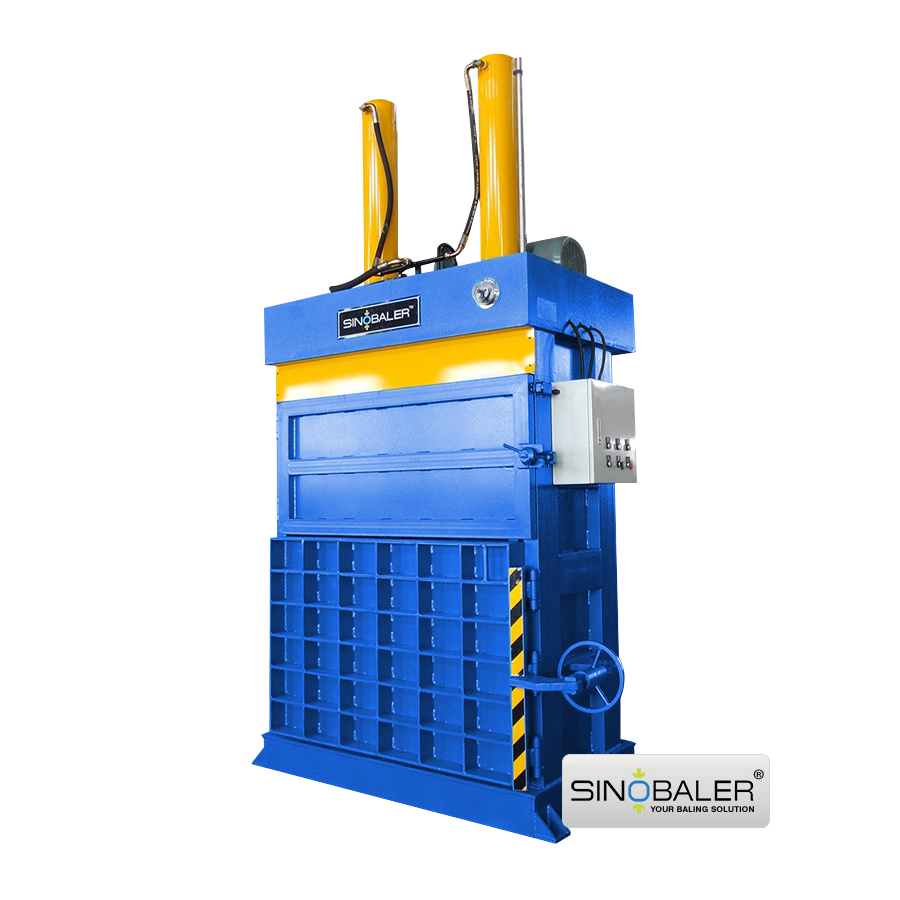
The Sinobaler Heavy Duty Dual Ram Baler delivers 80–200 tons of press force via its dual-ram system, ideal for compacting tough, fibrous, or rebounding materials, as well as soft ones requiring high bale density for optimized loading. It's perfect for natural and synthetic fibers, metal panels, tubes, profiles, and hard plastics like electronics shells and pipes. This baler reduces storage space, cuts transport costs, and boosts efficiency—making it a smart investment for modern recycling and waste handling.

Heavy Duty Baler for Fluffy Material (eg. Heavy Duty Fiber Balers)
These down stroke, manual tie, and feed balers are ideal for fiber recycling where labor is cost-effective. Depending on operator efficiency, throughput can reach up to 5 bales per hour. Sinobaler’s fiber balers offer a 15:1 compression ratio and 1100×700×600 mm bale size, with adjustable bale sizing and up to 120 bales per 40ft container. For custom machines or advanced models, contact our sales team. Auto-tie and conveyor-fed horizontal balers for higher output are also available.

Lifting Chamber Baler / Textile Baler / Clothes Baler
A lifting chamber baler, also called a used clothes or textile baler, is ideal for textile waste recycling. It's perfect for textile manufacturers, used clothing recyclers, second-hand shops, exporters, and rag graders. The lifting chamber design simplifies strapping, wrapping, and bale ejection for easy one-person operation, cutting labor costs. Bale weights range from 30kg to 600kg with up to 150 tons of force. For higher efficiency, the twin lifting chamber model allows simultaneous feeding and baling.

Swivel Twin Lifting Chamber Baler
The Swivel Twin Lifting Chamber Baler features a modern design and advanced engineering, making it an efficient solution for textile waste handling. It has two chambers connected by a central pivot—one chamber loads materials while the other compresses, bales, and straps them. This synchronized operation balances loading and processing, improving productivity. When a bale reaches its set compression, the chamber lifts automatically, signaling cycle completion and reducing downtime. Ideal for textile waste exporters and used clothing dealers, this baler offers efficiency, user-friendliness, and labor savings.
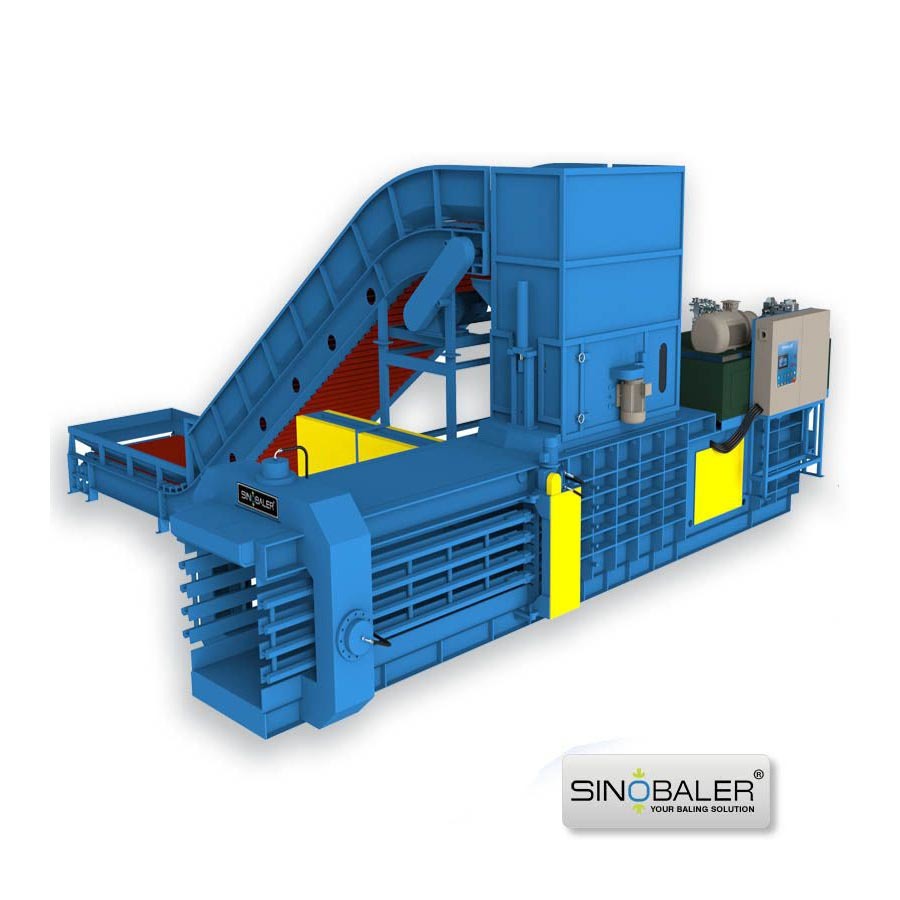
Fully Automatic Horizontal Baler
Sinobaler’s fully automatic horizontal baler (20–120 tons pressure) processes up to 15 tons/hour, ideal for high-volume recyclers handling cardboard/OCC, paper, plastic film, textile waste, and more. As our flagship open-end auto-tie baler, it features Mitsubishi PLC control, remote support, and simple operation. Bale weight/length is programmable via a touch screen for optimized container loading. The SHBA2-1200 model produces dense 1200kg rectangular bales, easy for transport/storage. CE-compliant with safety interlocking, SHBA2 is the perfect solution for large-scale soft waste recycling.
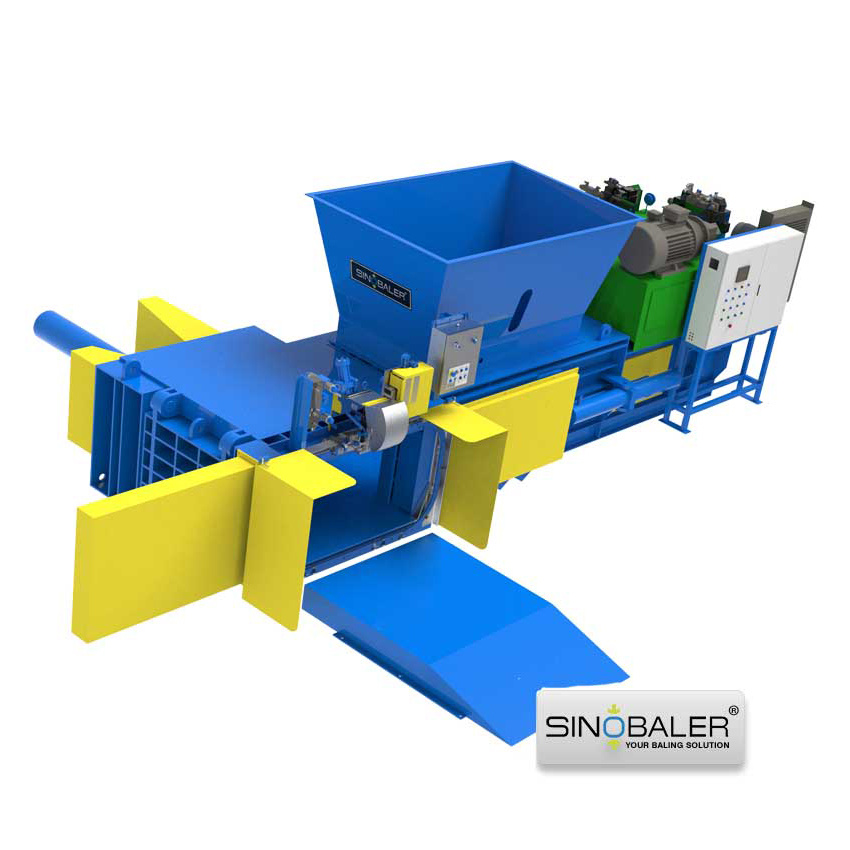
L-type Two Ram Automatic Horizontal Baler
The L-type two ram automatic horizontal baler is ideal for baling a wide range of recyclable waste. Compared to single ram balers, it offers greater versatility, supports both wire and plastic strapping, and produces high-density bales thanks to its separate strapping unit. Its flexible design can include features like a pre-compression lid to prevent cutting sensitive materials like textiles. Perfect for high-volume recycling centers, fodder exporters needing plastic straps, and municipal waste handlers seeking to avoid jams common in single ram balers.

Cardboard Baler (eg. Mill Size Baler)
The standard mill size baler is one of Sinobaler’s most popular vertical baling machines, ideal for handling cardboard and carton waste. Also known as a cardboard or carton baler, it suits recycling centers, cardboard manufacturers, supermarkets, stores, and print shops generating large cardboard waste. It compresses waste into dense bales up to 520kg with a size of 1520×760×1220mm, reducing volume by about 12:1. Easy to operate with manual door opening and auto bale ejection, it saves storage space, transport, and labor costs while meeting safety standards.

Mini Baler / Marine Baler / Multi Purpose Baling Machine
Sinobaler’s Multi-purpose Baler (Mini Baler) is a compact, versatile vertical baler ideal for malls, hotels, offices, hospitals, houses, and vessels, making it popular as a Marine Baler due to its small footprint and height. It meets marine industry needs with standard, waterproof, and explosion-proof versions, helping over 300 vessels reduce waste storage and disposal costs by up to 60%. This baler handles soft waste like cardboard, paper, cans, bottles, and film, with 10–20 tons press force, up to 800×600×800mm bale size, 20–100kg bale weight, and 12:1 compaction ratio for easy storage and transport.
Media and Gallery
Follow us


PRIVACY POLICY
We collect information from you when you fill out an inquiry or contact form. When submitting the form on our site, you may be asked to enter your name and contact details such as: e-mail address, mailing address and/or phone number, etc. Alternatively, you can choose not to complete our forms and visit our site anonymously. Any of the information we collect from you may be used to help us to better respond to your individual needs, and/or enable us to more effectively respond to your customer service requests and support needs. The email address you provided may also be used to send you information and updates pertaining to your inquiry and/or order, in addition to receiving occasional company news, updates, related product or service information, etc. SINOBALER does not sell, trade, or otherwise transfer to outside parties your personally identifiable information. This does not include trusted third parties who assist us in operating our website, conducting our business, or servicing you, so long as those parties agree to keep this information confidential. We may also release your information when we believe release is appropriate to comply with the law, enforce our site policies, or protect ours or others rights, property, or safety.
By using our site, you consent to our online privacy policy. If we decide to change our privacy policy, we will post those changes on this page. If you have any questions or concerns regarding our privacy policy, please e-mail info@sinobaler.com or mail your question to us at 1206 Yinzhou Shanghui Nan Lou, 1299 Yinxian Avenue, Yinzhou District, Ningbo 315192, P.R. China.
EXTERNAL LINKS & DISCLAIMER
Our web site has links to many other organizations with their permission. Upon leaving the SINOBALER web site, you are subject to the privacy policy of the new site which are not under our control. SINOBALER is not responsible for the content of any linked site or any link contained in a linked site. These links are provided to you as a service for you to better understand the different business relationships that SINOBALER has established, and/or to point the reader to other possible relevant resources.