







Home | Blog |

Benefits of Using RDF Balers in Waste-to-Energy Plants
✅ Request Solution | FAQ | Request Layout Design | Watch Demo
As global industries continue shifting toward sustainable energy and landfill reduction, Refuse Derived Fuel (RDF) has become a critical alternative fuel source for waste-to-energy plants, cement kilns, and industrial boilers. However, handling loose RDF materials efficiently remains a major challenge for many facilities.
This is where RDF balers play a vital role.
Industrial RDF balers compress lightweight and bulky waste materials into dense, compact bales, making transportation, storage, and fuel processing significantly more efficient. For modern waste-to-energy operations, RDF baling systems are no longer optional — they are an essential investment for improving profitability and operational performance.
What Is RDF?
Refuse Derived Fuel (RDF) is fuel produced from various types of combustible waste materials, including:
- Municipal solid waste (MSW)
- Plastic waste
- Paper and cardboard
- Textile waste
- Wood waste
- Packaging materials
- Industrial combustible waste
After sorting and processing, these materials are shredded, dried, and converted into fuel suitable for energy generation.
What Is an RDF Baler?
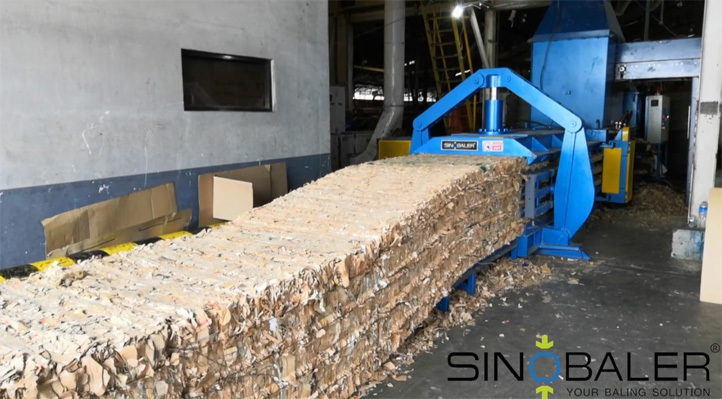
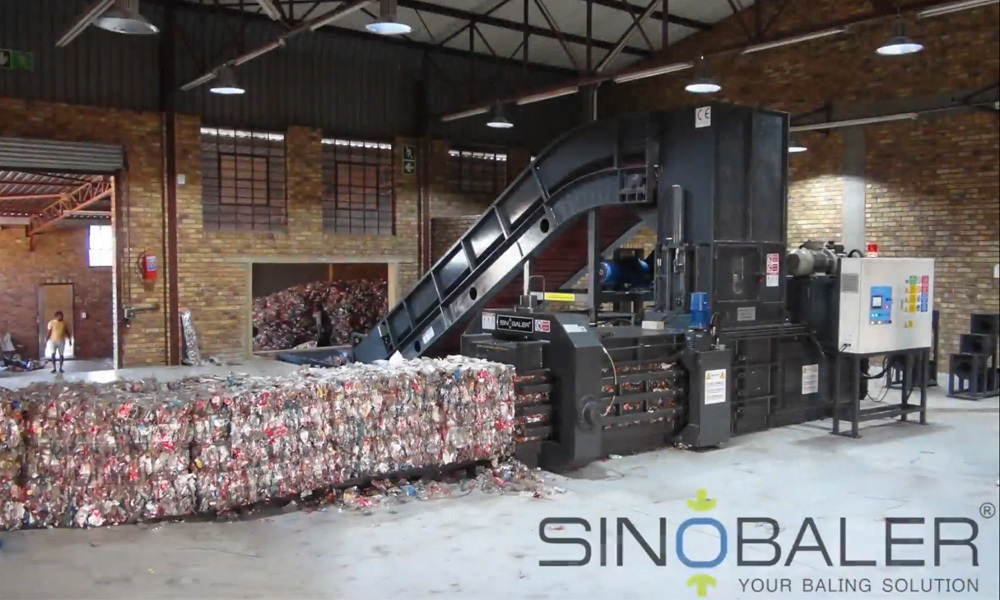
An RDF baler is an industrial machine designed to compress processed RDF materials into dense bales for easier handling and transportation.
The baling process helps:
- Reduce RDF volume
- Improve storage efficiency
- Lower logistics costs
- Simplify export handling
- Increase fuel density
Advanced RDF baling systems from SINOBALER are widely used in waste recycling centers, transfer stations, and waste-to-energy plants worldwide.
Major Benefits of Using RDF Balers in Waste-to-Energy Plants
1. Significant Reduction in Transportation Costs
Loose RDF materials occupy large volumes but have relatively low weight density. This leads to:
- Higher freight costs
- More truckloads
- Inefficient container utilization
RDF balers compress waste into high-density bales, allowing operators to:
- Maximize truck capacity
- Reduce transportation frequency
- Lower fuel consumption
- Cut logistics expenses
In many cases, RDF baling can reduce transportation costs by 40% to 70%.
2. Improved Storage Efficiency
Uncompressed RDF requires substantial warehouse space and creates operational clutter.
Compressed RDF bales:
- Save storage space
- Improve warehouse organization
- Allow safer stacking
- Reduce material handling complexity
This is especially important for facilities with limited storage capacity or high daily waste volumes.
3. Better Fuel Quality and Density
Consistent RDF density is critical for stable combustion performance in:
- Cement kilns
- Industrial furnaces
- Waste-to-energy incinerators
RDF balers help produce:
- Uniform bale sizes
- Stable fuel density
- Improved combustion consistency
- Easier feeding into fuel systems
High-density RDF bales also reduce dust generation during transportation and handling.
4. Lower Environmental Impact
RDF balers contribute to environmental sustainability by:
- Reducing landfill dependency
- Lowering transportation emissions
- Supporting waste-to-energy conversion
- Improving recycling efficiency
Compressed RDF also minimizes loose waste scattering and improves facility cleanliness.
5. Increased Operational Efficiency
Modern RDF balers streamline waste processing workflows by automating material compaction.
Benefits include:
- Faster waste handling
- Reduced labor requirements
- Continuous baling operation
- Improved plant productivity
Fully automatic RDF balers can process large waste volumes with minimal operator intervention.
6. Easier Export and International Shipping
Many countries export RDF fuel for industrial energy applications.
Compressed RDF bales provide:
- Higher container loading efficiency
- Better cargo stability
- Lower shipping costs
- Simplified port handling
Export-ready RDF bales are especially valuable in international biomass and alternative fuel markets.
7. Improved Safety and Cleanliness
Loose RDF materials can create:
- Dust pollution
- Fire hazards
- Trip hazards
- Unstable storage piles
Baled RDF improves workplace safety by:
- Keeping waste compact and controlled
- Reducing airborne particles
- Creating cleaner operating conditions
8. Support for Circular Economy Goals
Governments and industries worldwide are promoting:
- Waste reduction
- Resource recovery
- Renewable energy
- Carbon reduction initiatives
RDF balers support these goals by helping transform waste into valuable alternative fuel instead of landfill waste.
Industries That Benefit from RDF Balers
RDF baling systems are widely used in:
1.Waste-to-Energy Plants
For efficient fuel preparation and transportation.
2.Cement Plants
As alternative fuel systems for cement kilns.
3.Municipal Waste Facilities
To reduce landfill disposal volumes.
4.Material Recovery Facilities (MRFs)
For combustible waste processing.
5.Industrial Recycling Plants
To handle mixed combustible waste streams.
Choosing the Right RDF Baler
Important factors include:
- RDF material composition
- Daily processing volume
- Desired bale density
- Automation level
- Transportation requirements
- Facility layout
Professional RDF baler manufacturers like SINOBALER offer customized solutions for different waste management applications.
Future of RDF in Waste-to-Energy Industry
The RDF market continues growing due to:
- Rising landfill costs
- Renewable energy demand
- Stricter environmental regulations
- Carbon neutrality initiatives
As waste-to-energy infrastructure expands globally, RDF balers will become increasingly important for efficient fuel preparation and logistics optimization.
For companies seeking advanced RDF waste handling solutions, SINOBALER provides reliable industrial balers designed for high-performance waste compaction and alternative fuel processing.
Other Blogs

RDF Baler / Refused Derived Fuel Baler Machine
2017/02/16
What is RDF and RDF line? Refuse derived fuel (RDF) is a broad fuel concept which consists of many different wastes including commercial, post-industrial and post-consumer waste. Plastic packaging materials like plastic film, PET bottles, paper industry rejects, high-caloric plastics, wood waste, and other mixed waste are common input materials to produce alternative fuel pellets. […]

Solid Recovered Fuel Baler Machine / SRF Baler
2017/05/03
What is SRF (Solid Recovered Fuel)? Solid recovered fuel is popular as SRF. Also it is a fossil fuel replacement which has a calorific value and be used as fuel in the production of cement, lime and other materials. It is also a high quality and high calorific fuel produced predominantly from commercial and industrial wastes. […]

Solid Waste Compactor
2016/12/05
Solid waste compactor, what are they? What is a solid waste? Why we need a solid waste compactor? Whatever things we throw out in the garbage are the one named as solid waste. It can be anything from a small needle to that of the rusted iron bars. They are the cause of the land […]

Municipal Solid Waste Recycling
2015/09/29
Municipal Solid Waste (MSW)—more commonly known as trash, rubbish or garbage—consists of everyday items that are discarded by the public, such as food and kitchen waste, paper, glass, bottles, cans, toys, Tetra Packs, fabrics, clothes, batteries, electrical appliances, TVs, computers, construction and demolition waste, medical waste etc.. This waste stream comes from our homes, schools, […]
Related Videos

Other Blogs
RDF Baler / Refused Derived Fuel Baler Machine
2017/02/16
What is RDF and RDF line? Refuse derived fuel (RDF) is a broad fuel concept which consists of many different wastes including commercial, post-industrial and post-consumer waste. Plastic packaging materials like plastic film, PET bottles, paper industry rejects, high-caloric plastics, wood waste, and other mixed waste are common input materials to produce alternative fuel pellets. […]
Solid Recovered Fuel Baler Machine / SRF Baler
2017/05/03
What is SRF (Solid Recovered Fuel)? Solid recovered fuel is popular as SRF. Also it is a fossil fuel replacement which has a calorific value and be used as fuel in the production of cement, lime and other materials. It is also a high quality and high calorific fuel produced predominantly from commercial and industrial wastes. […]
2016/12/05
Solid waste compactor, what are they? What is a solid waste? Why we need a solid waste compactor? Whatever things we throw out in the garbage are the one named as solid waste. It can be anything from a small needle to that of the rusted iron bars. They are the cause of the land […]
Municipal Solid Waste Recycling
2015/09/29
Municipal Solid Waste (MSW)—more commonly known as trash, rubbish or garbage—consists of everyday items that are discarded by the public, such as food and kitchen waste, paper, glass, bottles, cans, toys, Tetra Packs, fabrics, clothes, batteries, electrical appliances, TVs, computers, construction and demolition waste, medical waste etc.. This waste stream comes from our homes, schools, […]
Media and Gallery
Follow us


PRIVACY POLICY
We collect information from you when you fill out an inquiry or contact form. When submitting the form on our site, you may be asked to enter your name and contact details such as: e-mail address, mailing address and/or phone number, etc. Alternatively, you can choose not to complete our forms and visit our site anonymously. Any of the information we collect from you may be used to help us to better respond to your individual needs, and/or enable us to more effectively respond to your customer service requests and support needs. The email address you provided may also be used to send you information and updates pertaining to your inquiry and/or order, in addition to receiving occasional company news, updates, related product or service information, etc. SINOBALER does not sell, trade, or otherwise transfer to outside parties your personally identifiable information. This does not include trusted third parties who assist us in operating our website, conducting our business, or servicing you, so long as those parties agree to keep this information confidential. We may also release your information when we believe release is appropriate to comply with the law, enforce our site policies, or protect ours or others rights, property, or safety.
By using our site, you consent to our online privacy policy. If we decide to change our privacy policy, we will post those changes on this page. If you have any questions or concerns regarding our privacy policy, please e-mail info@sinobaler.com or mail your question to us at 1206 Yinzhou Shanghui Nan Lou, 1299 Yinxian Avenue, Yinzhou District, Ningbo 315192, P.R. China.
EXTERNAL LINKS & DISCLAIMER
Our web site has links to many other organizations with their permission. Upon leaving the SINOBALER web site, you are subject to the privacy policy of the new site which are not under our control. SINOBALER is not responsible for the content of any linked site or any link contained in a linked site. These links are provided to you as a service for you to better understand the different business relationships that SINOBALER has established, and/or to point the reader to other possible relevant resources.