







Home | Blog |
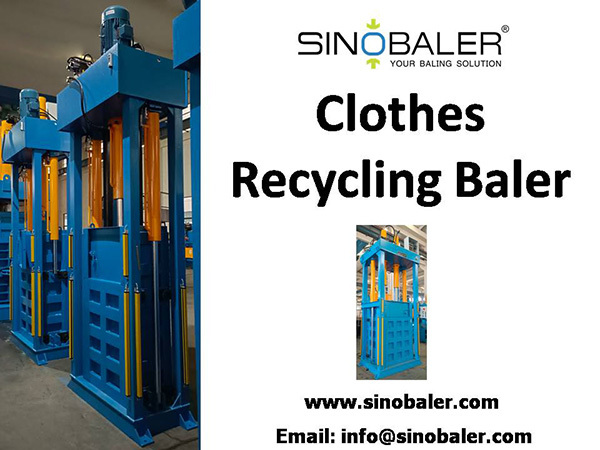
Clothes Recycling Baler
The global fashion industry, a $2.5 trillion sector, faces a daunting challenge: textile waste. Approximately 92 million tons of textile waste is generated annually, with less than 1% of clothing recycled into new garments. This crisis, fueled by fast fashion’s rapid production cycles, poses severe environmental threats, from landfills overflowing with synthetic fabrics to water pollution from textile dyeing. Amid this urgency, clothes recycling baler machines emerge as unsung heroes, transforming how we manage textile waste. By compressing discarded clothing into dense bales, these machines streamline recycling processes, making it economically and logistically feasible to divert textiles from landfills.
What is a Clothes Recycling Baler?
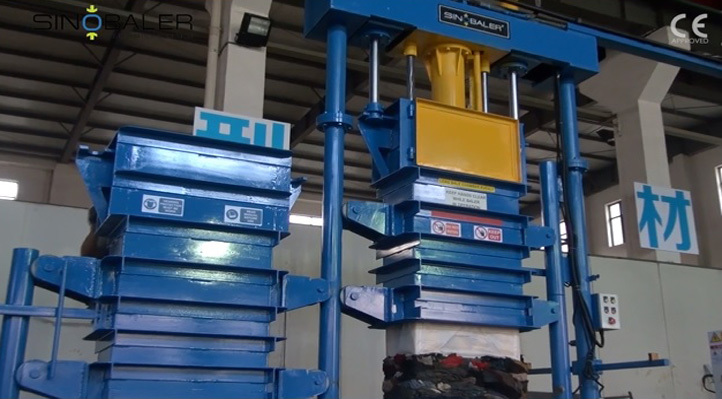
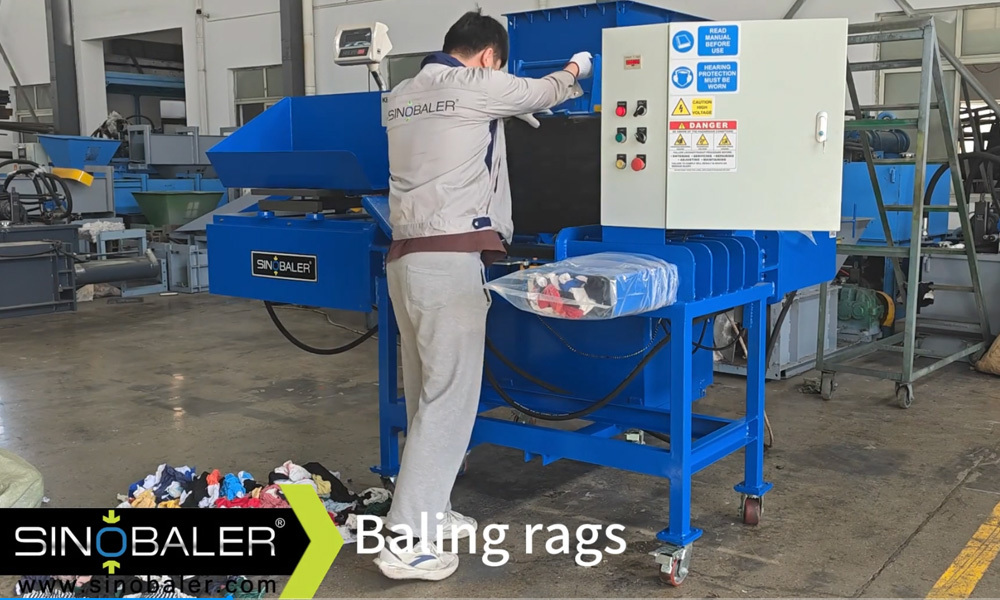
A clothes recycling baler is a specialized machine designed to compress post-consumer textiles—such as clothing, linens, and curtains—into compact, manageable bales. Similar to balers used for cardboard or plastic, these devices use hydraulic or mechanical force to reduce volume by up to 90%, simplifying storage, transportation, and recycling.
How Does a Clothes Recycling Baler Work?
The process involves three key stages:
- Collection & Sorting: Used textiles are gathered from sources like donation centers, retail stores, or municipal programs. Items are sorted by material (cotton, polyester, etc.) and condition to remove contaminants (e.g., zippers, non-textile items).
- Compression: Sorted textiles are fed into the baler. Hydraulic pistons or mechanical arms apply immense pressure, compressing the material into bales.
- Baling & Transportation: Once compressed, bales are ejected and stored. Their compact size reduces shipping costs by up to 75% compared to loose textiles, making recycling economically viable.
Benefits of Implementing Clothes Recycling Balers
- Environmental Impact: Reduces landfill dependence, lowering methane emissions from decomposing textiles. Recycling one ton of textiles saves 20,000 liters of water (UN data).
- Economic Efficiency: Lower transportation and storage costs for recyclers.
- Circular Economy Support: Bales become feedstock for new products—recycled cotton for insulation, polyester for furniture filling, or regenerated fibers for clothing.
- Hygiene & Safety: Compression minimizes pests and odors, addressing health concerns linked to rotting textiles.
Real-World Applications and Success Stories
- H&M’s In-Store Recycling: The fast-fashion giant uses balers in select stores to compact donations, diverting over 32,000 tons of textiles annually.
- Municipal Programs: Cities like Amsterdam have deployed public balers in residential areas, boosting textile recycling rates by 40% in two years.
- Corporate Partnerships: Brands like Patagonia collaborate with baler manufacturers to create closed-loop systems, recycling their own products into new lines.
The journey toward a zero-waste fashion industry starts with a SINOBALER clothes baler.
Quick links:
Other Blogs

Double Chamber Clothes Baler
2025/07/30
A double chamber clothes baler is a specialized vertical baling machine designed to compress used clothing, rags, and other textile waste into compact, stackable bales. Its two-chamber design allows for continuous operation—while one chamber is compressing, the other can be loaded—dramatically improving efficiency and productivity in textile recycling centers, second-hand clothing exporters, and garment factories.

How to Recycle Old Clothes
2016/06/08
Once some clothes get worn or out of fashion that are no longer be used, there are a few ways to reuse or recycle old clothes. Some recycling machines like clothing baler can help during old clothes recycling. 1. Old clothes can be donated to charities or some poor places like schools in some remote […]

Textile Bagging Press
2025/07/28
A textile bagging press is a specialized baling machine designed to compress textile materials—such as used clothes, rags, towels, fabric scraps, or fibers—into compact bales and automatically wrap them in bags. This dual function of pressing and bagging makes the machine particularly valuable for recycling centers, textile exporters, donation organizations, and second-hand clothing distributors.

Textile Type and Textile Recycling
2015/04/10
Textile recycling is the whole process to reuse or reprocess used clothing, fibrous material and clothing scraps from the manufacturing. Different textile waste can be in different recycling. Cotton recycling, wool recycling, nylon fiber recycling, used clothes recycling and leather recycling are all typical ones. What types does textile have? Textile material is classified according […]
Related Videos

Other Blogs
2025/07/30
A double chamber clothes baler is a specialized vertical baling machine designed to compress used clothing, rags, and other textile waste into compact, stackable bales. Its two-chamber design allows for continuous operation—while one chamber is compressing, the other can be loaded—dramatically improving efficiency and productivity in textile recycling centers, second-hand clothing exporters, and garment factories.
2016/06/08
Once some clothes get worn or out of fashion that are no longer be used, there are a few ways to reuse or recycle old clothes. Some recycling machines like clothing baler can help during old clothes recycling. 1. Old clothes can be donated to charities or some poor places like schools in some remote […]
2025/07/28
A textile bagging press is a specialized baling machine designed to compress textile materials—such as used clothes, rags, towels, fabric scraps, or fibers—into compact bales and automatically wrap them in bags. This dual function of pressing and bagging makes the machine particularly valuable for recycling centers, textile exporters, donation organizations, and second-hand clothing distributors.
Textile Type and Textile Recycling
2015/04/10
Textile recycling is the whole process to reuse or reprocess used clothing, fibrous material and clothing scraps from the manufacturing. Different textile waste can be in different recycling. Cotton recycling, wool recycling, nylon fiber recycling, used clothes recycling and leather recycling are all typical ones. What types does textile have? Textile material is classified according […]
Media and Gallery
Follow us


PRIVACY POLICY
We collect information from you when you fill out an inquiry or contact form. When submitting the form on our site, you may be asked to enter your name and contact details such as: e-mail address, mailing address and/or phone number, etc. Alternatively, you can choose not to complete our forms and visit our site anonymously. Any of the information we collect from you may be used to help us to better respond to your individual needs, and/or enable us to more effectively respond to your customer service requests and support needs. The email address you provided may also be used to send you information and updates pertaining to your inquiry and/or order, in addition to receiving occasional company news, updates, related product or service information, etc. SINOBALER does not sell, trade, or otherwise transfer to outside parties your personally identifiable information. This does not include trusted third parties who assist us in operating our website, conducting our business, or servicing you, so long as those parties agree to keep this information confidential. We may also release your information when we believe release is appropriate to comply with the law, enforce our site policies, or protect ours or others rights, property, or safety.
By using our site, you consent to our online privacy policy. If we decide to change our privacy policy, we will post those changes on this page. If you have any questions or concerns regarding our privacy policy, please e-mail info@sinobaler.com or mail your question to us at 1206 Yinzhou Shanghui Nan Lou, 1299 Yinxian Avenue, Yinzhou District, Ningbo 315192, P.R. China.
EXTERNAL LINKS & DISCLAIMER
Our web site has links to many other organizations with their permission. Upon leaving the SINOBALER web site, you are subject to the privacy policy of the new site which are not under our control. SINOBALER is not responsible for the content of any linked site or any link contained in a linked site. These links are provided to you as a service for you to better understand the different business relationships that SINOBALER has established, and/or to point the reader to other possible relevant resources.