







Baler Knowledgebase / FAQ
The baler knowledge base considered as baling machine dictionary, provides our world wide customers very convenient database for answers and information sharing about hydraulic baling press machines especially waste recycling baler and other related waste compactors and recycling industry information. Sinobaler is here ready to service you through our yearly accumulated technical experience and huge internal database.
✅ Get Quote | Download Brochure | Ask Engineer | Video Demo
Why Proper Feeding Matters
Improper feeding can cause:
- Low bale density
- Machine jams
- Reduced productivity
- Safety risks
- Increased maintenance cost
The correct feeding method depends on cardboard volume, facility layout, and baler type.
Step-by-Step Feeding Process
Step 1 — Cardboard Preparation
- Remove plastic straps
- Flatten boxes when possible
- Avoid metal contamination
- Separate oversized cartons
Step 2 — Sorting & Staging
- Use collection cages or bins
- Keep feeding area clean
- Prevent mixed waste
Step 3 — Feeding the Baler
- Load evenly
- Do not overfill chamber
- Keep materials below safety line
Step 4 — Compression Cycle
- Close door properly
- Start compression cycle
- Repeat feeding until full bale
Popular Cardboard Baler Feeding Methods
Choosing the right feeding method is essential for achieving stable operation, high bale density, and efficient cardboard recycling.
Depending on waste volume and facility layout, cardboard balers are commonly fed using manual feeding, excavator feeding, or conveyor feeding systems.
1️⃣ Manual Feeding — Flexible & Cost-Effective

Best for:
- Retail stores
- Supermarkets
- Small warehouses
- Low to medium cardboard volume
How it works
Operators manually load flattened cardboard into the baler chamber.
Advantages
- Low investment cost
- Simple installation
- Easy operation
- Minimal space requirement
Considerations
- Requires operator labor
- Not suitable for continuous high-volume recycling
👉 Typically used with vertical cardboard balers.
2️⃣ Excavator Feeding — Heavy-Duty Bulk Handling

Best for:
- Recycling centers
- Waste transfer stations
- Large OCC accumulation areas
- Outdoor recycling yards
How it works
An excavator grabs and feeds loose cardboard directly into the baler feed opening or hopper.
Advantages
- Handles large volumes quickly
- Suitable for loose or bulky cardboard piles
- Reduces manual labor dramatically
Considerations
- Requires sufficient working space
- Best matched with heavy-duty horizontal balers
👉 Ideal solution when cardboard arrives in bulk loads.
3️⃣ Conveyor Feeding — Continuous & Automated Operation

Best for:
- Distribution centers
- E-commerce warehouses
- Manufacturing plants
- High-output recycling lines
How it works
Cardboard waste is transported automatically via conveyor belts into the baler for continuous compression.
Advantages
- Continuous feeding
- Stable production efficiency
- Reduced labor cost
- Supports automation integration
Considerations
- Higher initial investment
- Requires layout planning
👉 Commonly used with semi-automatic or fully automatic horizontal balers.
Feeding Method Comparison
| Feeding Method | Capacity | Labor Requirement | Automation Level | Typical Application |
|---|---|---|---|---|
| Manual | Low–Medium | High | Low | Retail / Warehouse |
| Excavator | High | Medium | Medium | Recycling Yard |
| Conveyor | Very High | Low | High | Industrial Facilities |
How to Choose the Right Feeding Method
Your ideal feeding system depends on:
- Daily cardboard volume
- Available labor
- Facility layout
- Automation goals
- Budget planning
👉 A properly matched feeding method can improve baling efficiency by 30–50%.
✅ Request Free Cardboard Baler Layout Consultation
🟦 Common Feeding Mistakes
❌ Feeding unflattened boxes randomly
❌ Mixing plastic and cardboard
❌ Overloading chamber
❌ Feeding wet cardboard excessively
❌ Ignoring material distribution
🟦 Safety Guidelines During Feeding
- Never reach into chamber during cycle
- Follow safety interlock systems
- Train operators regularly
- Stop machine before maintenance
Safety content increases professional credibility.
Get Your Custom Cardboard Baler Feeding Solution from SINOBALER
SINOBALER cardboard balers support manual and fully automatic feeding solutions tailored to different recycling operations.
👉 View Cardboard Baler Solutions
Metal baler is the most popular choice. It provides strong compression for dense bales and is suitable for continuous and heavy-duty operation.

- When springs are mixed with foam, fabric, wood, or other materials.
- When you need smaller particle size for melting or further processing.
- When higher bale density is required for maximum loading capacity.

- High carbon steel material is strong and durable, suitable for high-pressure baling.
- Good elasticity& tensile strength springs compress tightly under hydraulic pressure.
- Bulky but compressible loose springs take up space but can be compacted into dense bales.
- Baled springs are easy to stack, store and ship to steel mills.

Yes, they can. Mattress springs can be baled directly without shredding in most cases. They are long, strong, and made of high-carbon steel, making them ideal for direct compression.

When it comes to textile recycling, both lifting chamber balers and bagging balers are widely used—but which one is truly the best for your needs? At SINOBALER, this is one of the questions we hear most often. Drawing on years of hands-on experience, we’ve put together a clear guide to help you choose the right baler with confidence.
1. Lifting Chamber Baler – Ideal for Clothing and Textile Recycling
What It Does Best
- Specifically designed for used clothes, rags, towels, and textile waste
- Chamber lifts up, making tying, wrapping, and bale removal easy
- Supports manual wrapping using plastic or woven bags to protect textiles
- Can be operated by a single person, saving labor
- Typical bale weight: 40–500 kg
Popular Baling Machines in SINOBALER


Key Advantages
- ✔ Excellent for second-hand clothing export
- ✔ Produces clean, square bales with a professional presentation
- ✔ Flexible wrapping options, which is important for resale markets
Limitations
- ❌ Requires more manual work for tying and handling
- ❌ Lower automation and throughput compared to continuous systems
2. Bagging Baler – Best for Loose Fiber and Bulk Materials
What It Does Best
- Compresses and bags in a single step
- Typical bale weight: 1–20 kg
- Ideal for:
- Cotton fiber
- Wool
- Synthetic fibers
- Biomass or other loose textile materials
Popular Baling Machine in SINOBALER

Key Advantages
- ✔ Faster operation (no separate wrapping step)
- ✔ Cleaner handling (bales come already bagged)
- ✔ Works well with loose, fluffy materials
Limitations
- ❌ Not suitable for wearable clothes or sorted garments
- ❌ Limited flexibility in bale shape and presentation
- ❌ Less preferred by buyers in the second-hand clothing market
🧠 How to Choose the Right Baler
Choose a Lifting Chamber Baler if:
- You handle:
- Used clothes
- Sorted garments
- Export textiles
- You need:
- Clean, well-shaped bales
- Manual quality control for resale purposes
- Your business focus is:
- Clothing recycling
- Second-hand clothing export
✅ This is the most common choice for textile recyclers worldwide.
Choose a Bagging Baler if:
- You handle:
- Loose fiber (cotton, polyester, wool)
- Shredded textiles
- You want:
- Faster, more automated workflow
- Minimal manual labor
- Your output is:
- Raw material for further processing, not wearable goods
💡 Simple Rule of Thumb
- 👕 Clothes → Lifting Chamber Baler
- 🧵 Fiber / fluff → Bagging Baler
Based on SINOBALER’s extensive experience, customers using bagging balers generally prefer smaller textile bales ranging from 1 to 20 kg, with around 10 kg considered ideal. In contrast, textile bales produced by lifting chamber balers are typically larger, usually over 40 kg, making them perfect for clothing export and resale markets.
Watch demo operations from SINOBALER various textile balers.
Typical demo operation by SINOBALER baling machines:
- Efficient lifting chamber baler for used clothes
- Rags baling with scale weighing horizontal bagging baler
- Automatic weighing vertical bagging baler for clothes and rags
Quick links:
Ejecting a bale from a baler depends on the type of baler (vertical or horizontal) and the material being baled. Here’s a detailed guide:
Safety First
- Ensure the baling cycle is fully complete and the compression ram is fully retracted.
- Clear the area around the ejection path.
- Use appropriate PPE (gloves, shoes, safety goggles).
The Type of Balers
- Common for: Small to medium bales, light materials like cardboard, textiles, aluminum, or plastic.
- Steps to Eject:
- Ensure the baling cycle is complete and the ram is fully retracted.
- Open the front door or chamber door.
- The compressed bale usually drops onto the built-in floor or rollers. You may need to push it slightly with a lever or tool.
- Remove the bale manually or with a pallet jack/forklift if needed.
- Close the door and reset the baler for the next cycle.
- Ensure the baling cycle is complete and the ram is fully retracted.
- Common for: Larger bales, heavier materials like metals, plastics, hay or textiles.
- Steps to Eject:
- Complete the baling and tying cycle.
- Activate the bale ejection system (often hydraulic). This pushes the bale out of the compression chamber. For fully automatic balers, the system automatically ejects the bale onto a conveyor or into a receiving area after compressing and tying.
- The bale is pushed onto the bale chute, conveyor, or floor, depending on the model. For fully automatic balers, operators only need to ensure the path is clear for the bale.
- Use a forklift, pallet jack, or grabber to move the bale to storage or shipment.
- Complete the baling and tying cycle.
Manual or the Available Equipment
1. Manual Handling (Small Bales)
- Suitable for lightweight bales.
- Steps:
- Ensure the baler has completed the compression and tying process.
- Open the ejection door carefully.
- Slide the bale out onto a pallet or a flat, stable surface.
- Use proper lifting techniques to avoid injury (bend knees, keep back straight).
- Ensure the baler has completed the compression and tying process.
⚠️ Safety tip: Always wear gloves and steel-toed shoes when handling metal bales.
2. Using a Forklift or Pallet Jack
- Recommended for medium to large bales.
- Steps:
- Position the forklift or pallet jack at the end of the baler where the bale is ejected.
- If the baler has a bale chute or roller table, let the bale slide onto it first.
- Lift the bale carefully using forks or a pallet, ensuring the load is balanced.
- Transport the bale to storage or shipping area.
- Position the forklift or pallet jack at the end of the baler where the bale is ejected.
💡 Many balers have a built-in roller conveyor that helps bales slide onto a pallet or forklift platform automatically.
3. Using a Grabber or Crane (Heavy/Industrial Bales)
- For very heavy bales (eg. large metal bales).
- Steps:
- Attach a bale grabber or hook to the crane.
- Engage the grabber securely around the bale.
- Lift the bale gently and move it to the storage area.
- Release the bale slowly, ensuring it lands safely.
- Attach a bale grabber or hook to the crane.
⚠️ Safety tip: Always check that the crane or grabber’s lifting capacity exceeds the bale weight.
General Tips
- Always wait until the compression ram has fully retracted before opening doors.
- Regularly maintain rollers or conveyor systems to ensure smooth bale movement.
- Keep hands and tools clear of the ejection path to avoid injury.
- For heavy bales, always use mechanical assistance (forklift, grabber, or conveyor).
- Check the baler’s manual for specific ejection controls and safety interlocks.
Feeding materials into a baler can be done in various ways depending on the type of materials, the equipment involved, and the setup of the baling system. Here’s a breakdown of some common feeding methods:
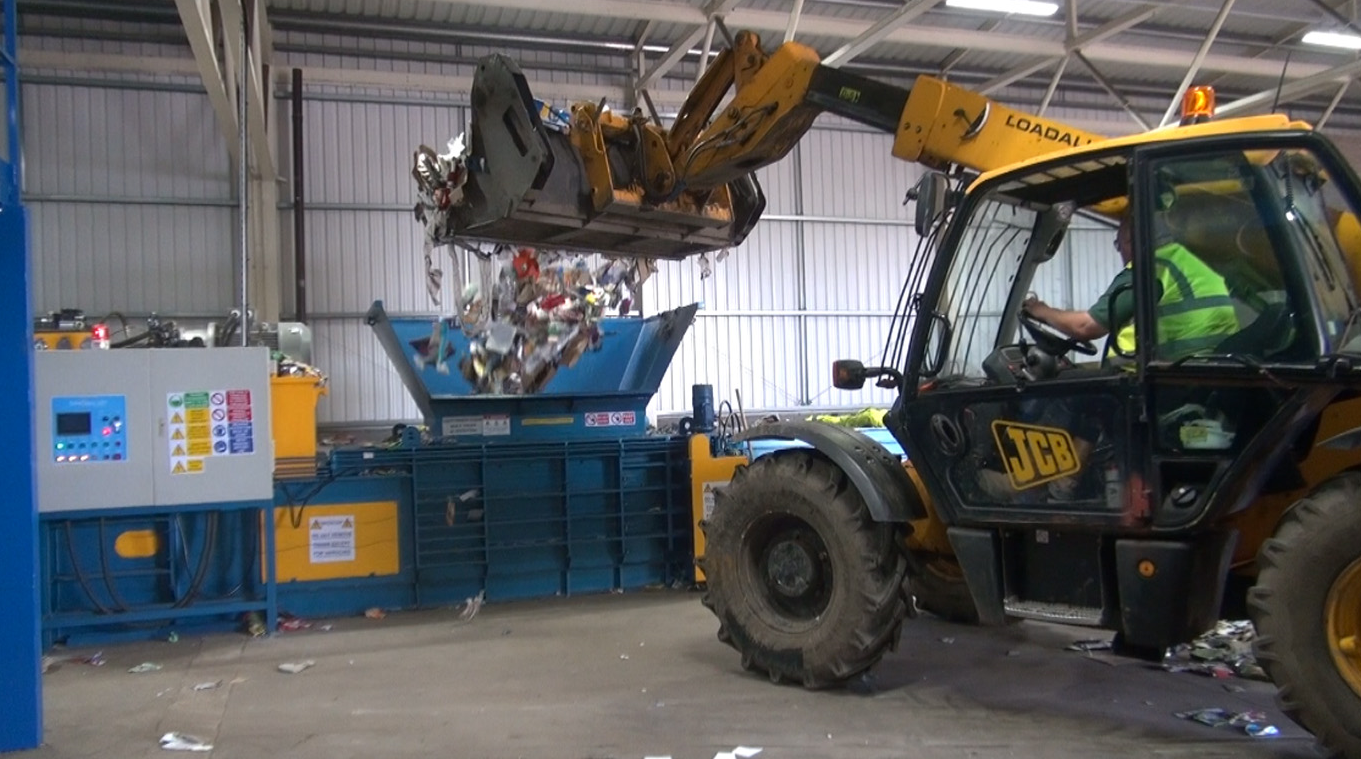
1.Excavator:
- Used for: Large, bulkier materials like scrap metal, wood, or other heavy materials.
- How it works: An excavator with a bucket or grapple is used to load materials into the hopper or feed opening of the baler. The excavator can precisely place materials into the feeding area.
- Advantages: Ideal for large-scale operations, especially when materials are heavy or difficult to move manually.
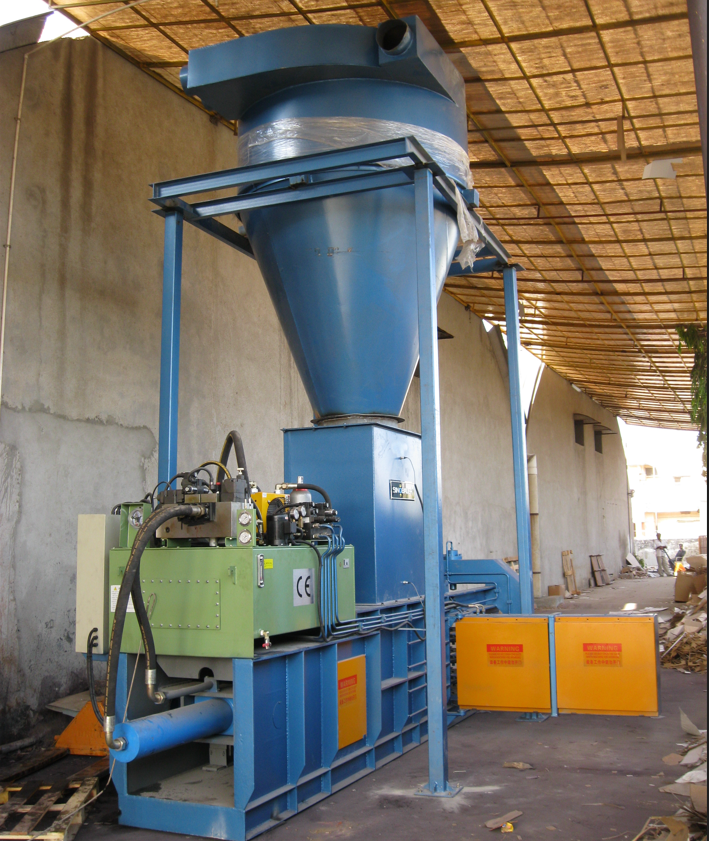
2. Air Cyclone:
- Used for: Light, fluffy materials like paper, plastic, or other recyclables that need to be separated from dust and debris.
- How it works: An air cyclone system uses airflow to move lightweight materials into the baler. It can also help in separating light materials from heavy ones before they enter the baling chamber.
- Advantages: Great for automating the process and improving efficiency when dealing with fine materials or mixed waste.
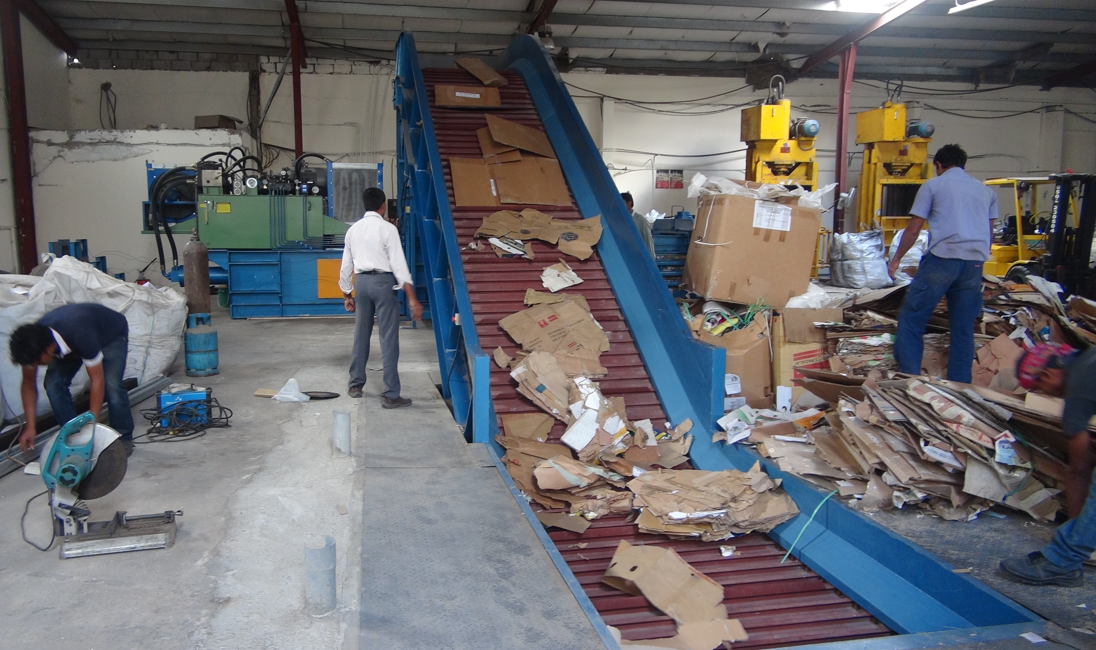
- Used for: Continuous feeding of materials like cardboard, plastics, textiles, or paper.
- How it works: Materials are loaded onto a conveyor belt, which moves the materials to the baler’s feed hopper. The conveyor can be configured to run automatically or manually, depending on the material flow and system design.
- Advantages: Ideal for continuous, high-volume feeding, especially in automated recycling plants or warehouses.
4. Dumper (Tippers):
- Used for: Materials in bins or containers, such as industrial waste, textiles, or recyclables.
- How it works: A dumper or tipper lifts a container of materials and dumps it directly into the baler’s feed hopper. This is often seen with bulk bins or compacted waste.
- Advantages: Simple and effective for large quantities of materials that are pre-loaded into containers. It reduces manual labor and speeds up the feeding process.


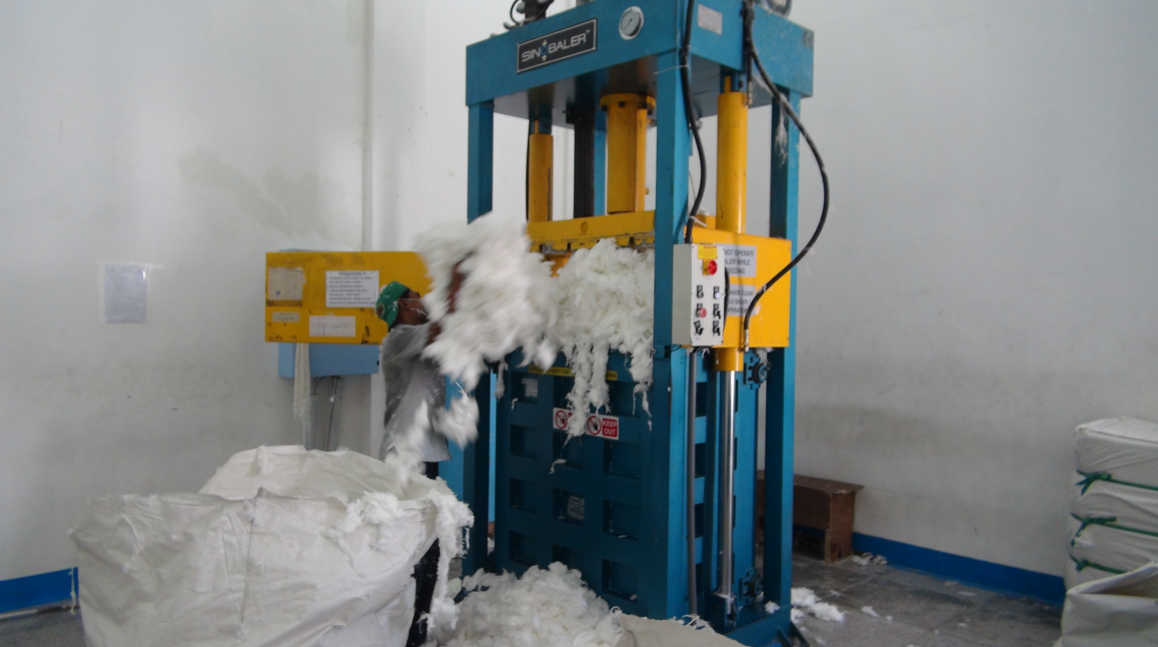
5. Other options:
- Manual Feeding: For smaller-scale operations or when dealing with materials that require sorting, workers might feed materials directly into the baler using forklifts or by hand.
- Forklift: Can be used to lift and drop larger bales or materials into the baler’s feed area.
Each of these methods can be adapted based on the specific baling process, material type, and operational needs. For maximum efficiency, it's important to match the feeding method to the material characteristics and volume.
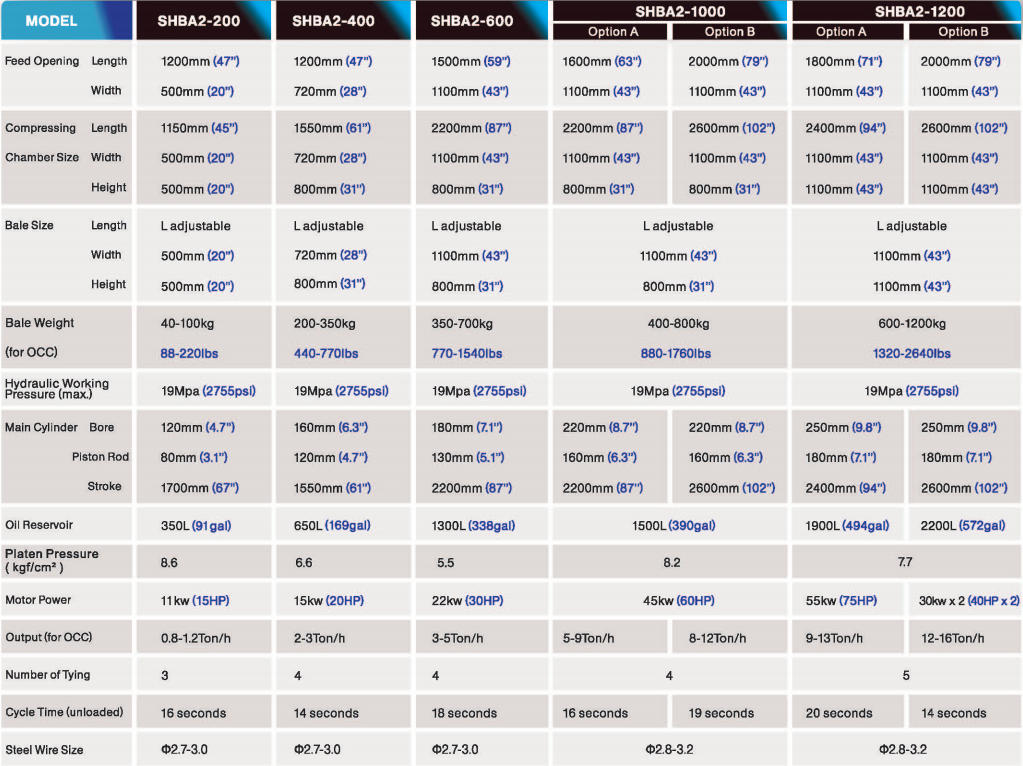
Why finding a suitable steel wire size is important to your machine as well as operations? In order to ensure smooth operation for your Automatic Horizontal Baler, you need to prepare suitable baling wires. A steel wire thinner than the suggested size will likely keep breaking during the tying process which will greatly affect efficiency. Following is the information of the suitable steel wire sizes for different model of SHBA2 series:
A wide variety of materials can be baled, depending on the baling equipment and intended recycling or disposal process. Here's a breakdown by category:
Paper & Cardboard
• Cardboard boxes (OCC)
• Office paper (white paper)
• Newspaper
• Paper cores and tubes
• Tissue and toilet paper waste
• Paper bags
• Mixed paper
Textiles
• Used clothes
• Rags and wipers
• Fabric scraps
• Carpets and rugs
• Shoes
• Non-woven textiles
Plastics
• PET bottles
• HDPE/LDPE containers
• Plastic films and shrink wraps
• Plastic drums and barrels
• Rigid/stiff plastic items
• Plastic bumpers
• Plastic purges and sprues
• PP woven bags
• Waste plastic sheets
Metals
• Steel cans
• Aluminum cans and scraps
• Iron scrap
• Copper tubes
• Cast iron scrap
• Turnings and borings (ferrous and non-ferrous)
• Nickel alloys
• Other non-ferrous metals
Biomass & Agricultural Waste
• Hay, straw, and alfalfa
• Husk (e.g., rice husk, peanut shell, coffee husk)
• Bagasse
• Seaweed
• Coco peat
• Cotton seed
• Compost
• Peat moss
Wood Waste
• Wood shavings and sawdust
• Wood chips
• Wood offcuts
Other Industrial & Special Waste
• Tires and rubber
• Bead wires from tires
• Paint tins and buckets
• Waste barrels
• Foam (PUR, etc.)
• Tipping foils
• Mixed waste (e.g., MSW or RDF input)
Browse our baler applications to discover the best machine for your needs.
Ask us!
Don’t see the question you are looking for? Ask us!
Media and Gallery
Follow us


PRIVACY POLICY
We collect information from you when you fill out an inquiry or contact form. When submitting the form on our site, you may be asked to enter your name and contact details such as: e-mail address, mailing address and/or phone number, etc. Alternatively, you can choose not to complete our forms and visit our site anonymously. Any of the information we collect from you may be used to help us to better respond to your individual needs, and/or enable us to more effectively respond to your customer service requests and support needs. The email address you provided may also be used to send you information and updates pertaining to your inquiry and/or order, in addition to receiving occasional company news, updates, related product or service information, etc. SINOBALER does not sell, trade, or otherwise transfer to outside parties your personally identifiable information. This does not include trusted third parties who assist us in operating our website, conducting our business, or servicing you, so long as those parties agree to keep this information confidential. We may also release your information when we believe release is appropriate to comply with the law, enforce our site policies, or protect ours or others rights, property, or safety.
By using our site, you consent to our online privacy policy. If we decide to change our privacy policy, we will post those changes on this page. If you have any questions or concerns regarding our privacy policy, please e-mail info@sinobaler.com or mail your question to us at 1206 Yinzhou Shanghui Nan Lou, 1299 Yinxian Avenue, Yinzhou District, Ningbo 315192, P.R. China.
EXTERNAL LINKS & DISCLAIMER
Our web site has links to many other organizations with their permission. Upon leaving the SINOBALER web site, you are subject to the privacy policy of the new site which are not under our control. SINOBALER is not responsible for the content of any linked site or any link contained in a linked site. These links are provided to you as a service for you to better understand the different business relationships that SINOBALER has established, and/or to point the reader to other possible relevant resources.